Profile view of a bearded man wearing a dark green baseball cap and a dark gray T-shirt against a plain light background.

Can a heat pump keep up in a Pennsylvania winter

Step 1 of 3: Equipment

Can a heat pump keep up in a Pennsylvania winter?

You've got a heat pump and you've heard they struggle once it gets really cold. Pennsylvania winters bring plenty of nights well below freezing, and most of your neighbors are heating with gas. You want to know if you're asking too much of the equipment, or if it's going to leave you cold in January.

Yes, but it needs backup heat for the coldest stretches

A heat pump pulls heat from the outside air, and the colder that air gets, the less heat it can pull. Down near the teens and single digits, which Pennsylvania sees most winters, a heat pump alone starts falling behind what the house needs. That's why a heat pump here is installed with backup heat, usually electric resistance coils or a gas furnace, that kicks in automatically when the outdoor temperature drops too low for the heat pump to carry the load by itself. With the right size unit and backup paired to it, the system keeps the house warm through the whole winter, and the heat pump still does most of the work on the milder days that make up a good part of the season.

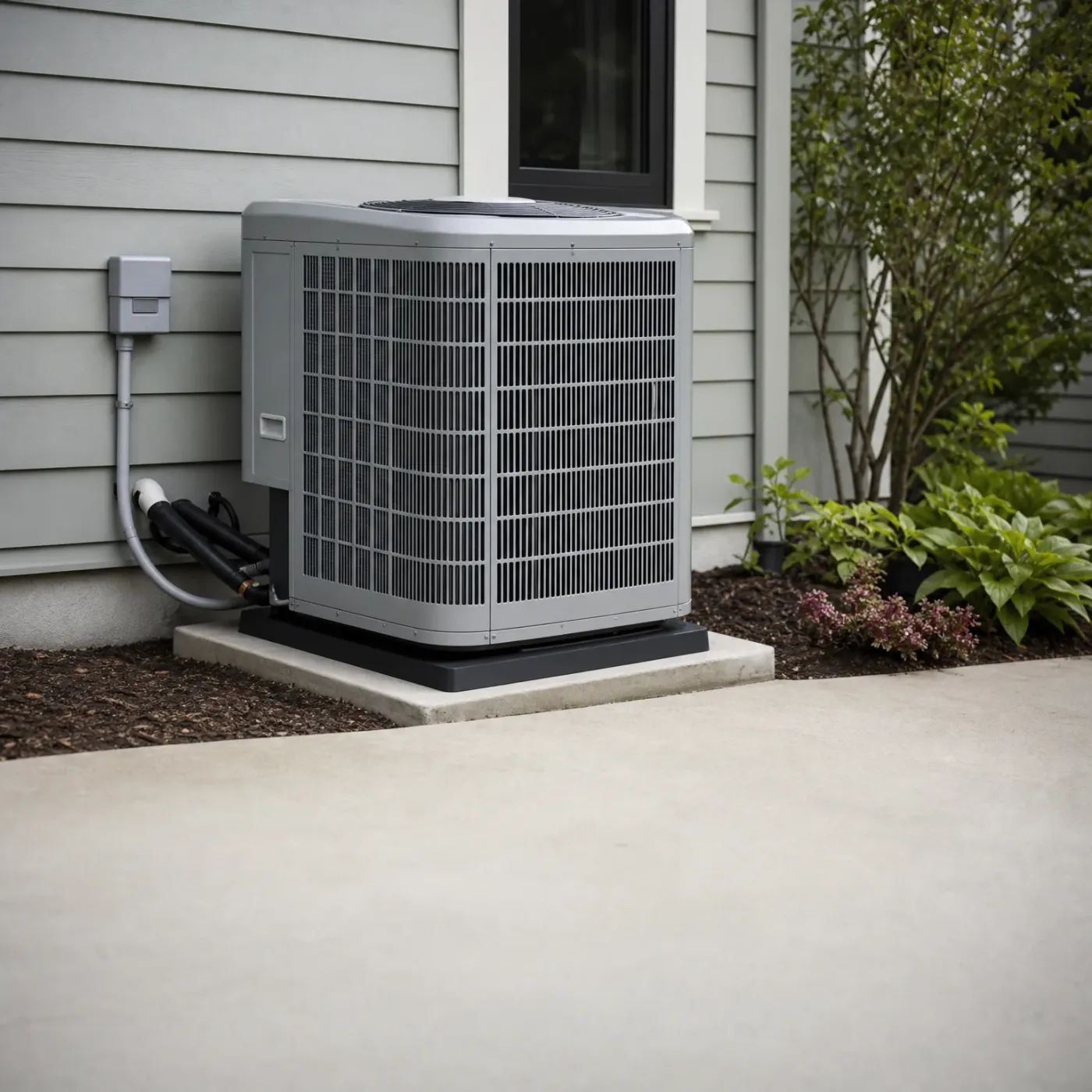
A gray outdoor condenser unit on a concrete pad beside a light-colored lap-sided house, with a wall-mounted disconnect box, refrigerant lines, mulch bed and shrubs, and a concrete walkway in the foreground.

Running the way it should

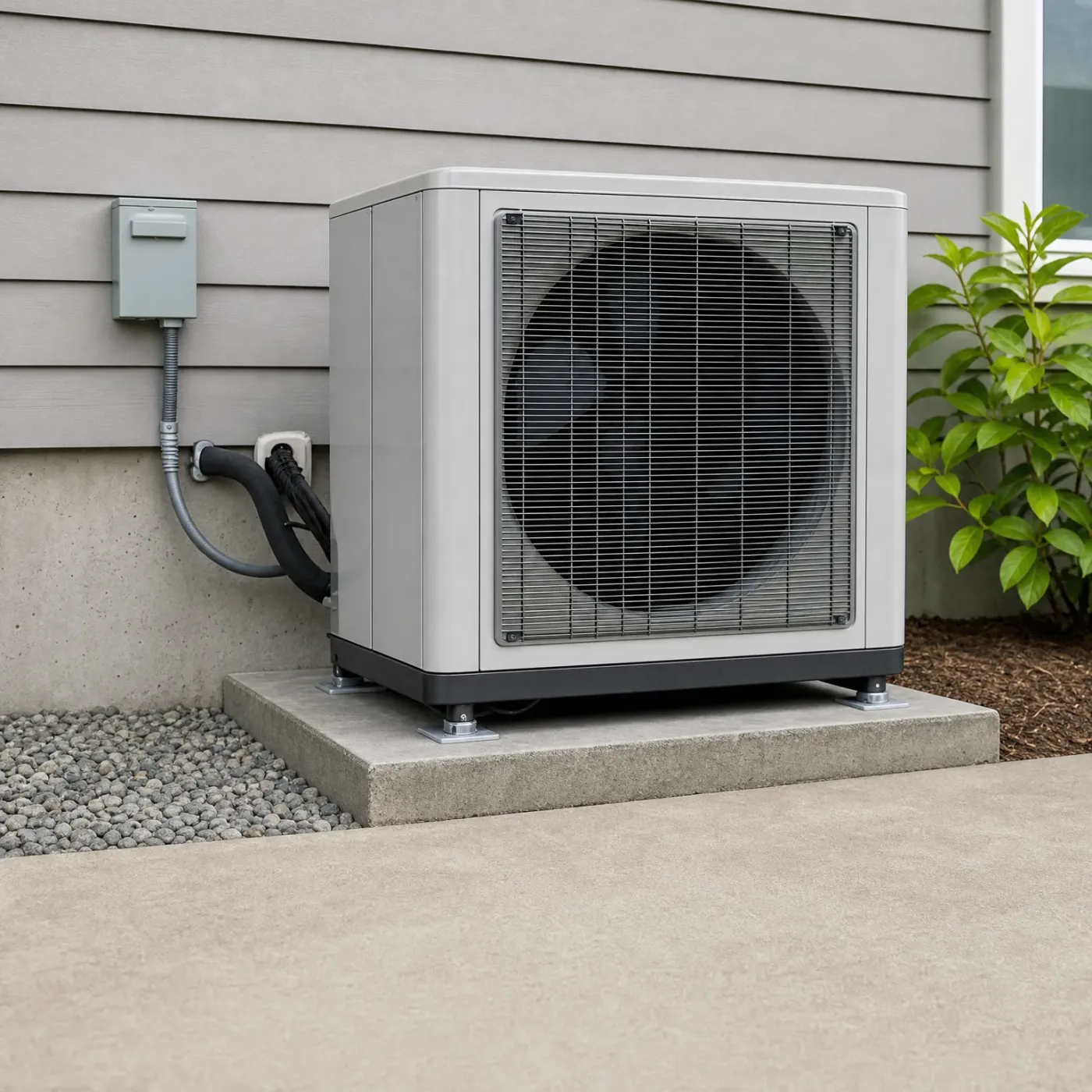
A heat pump keeping up looks ordinary. The outdoor unit sits on its pad, lines running clean to the disconnect box, no ice built up on the coil or the top grille. It cycles on, holds the temperature you set, and the house stays warm without the backup heat kicking in every hour.
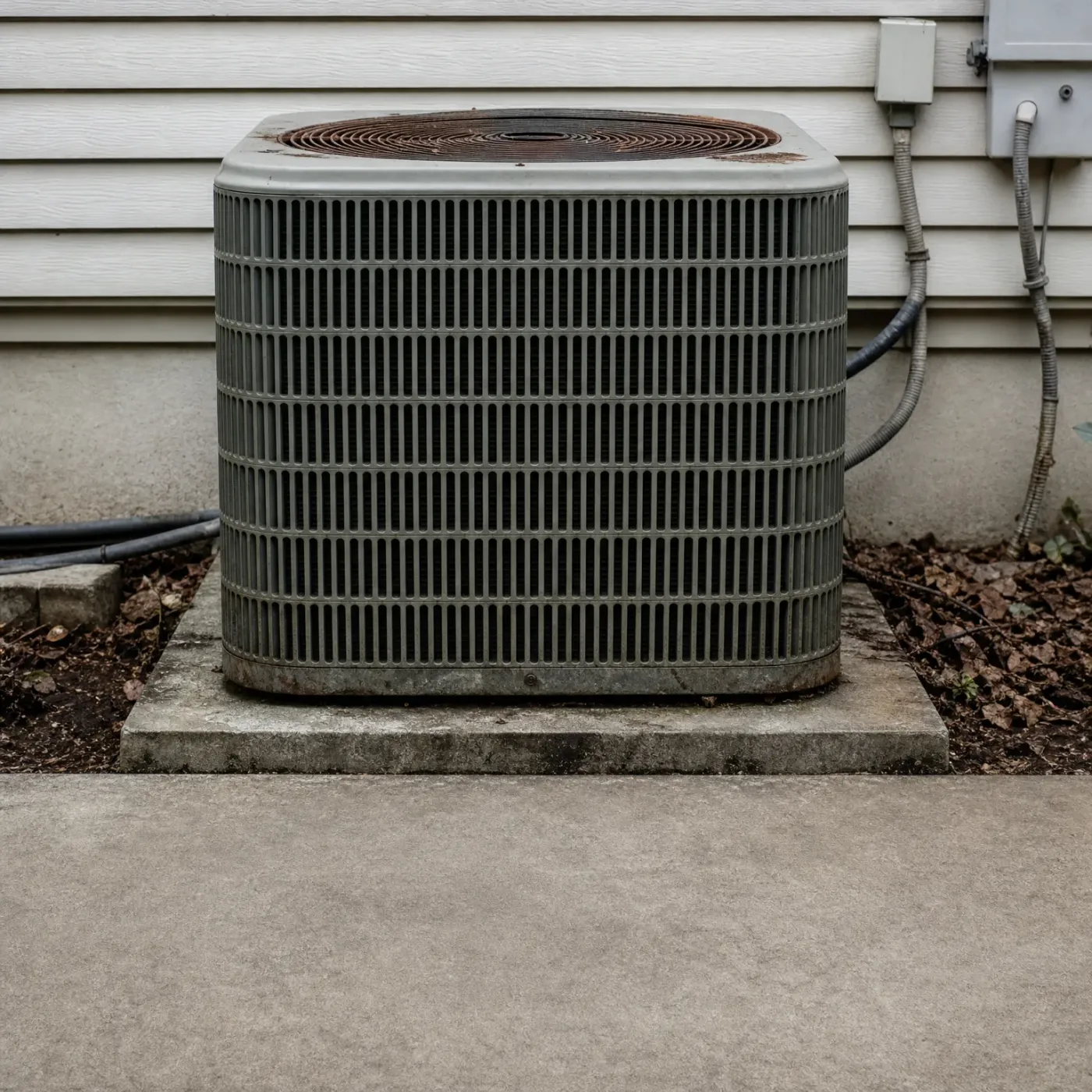

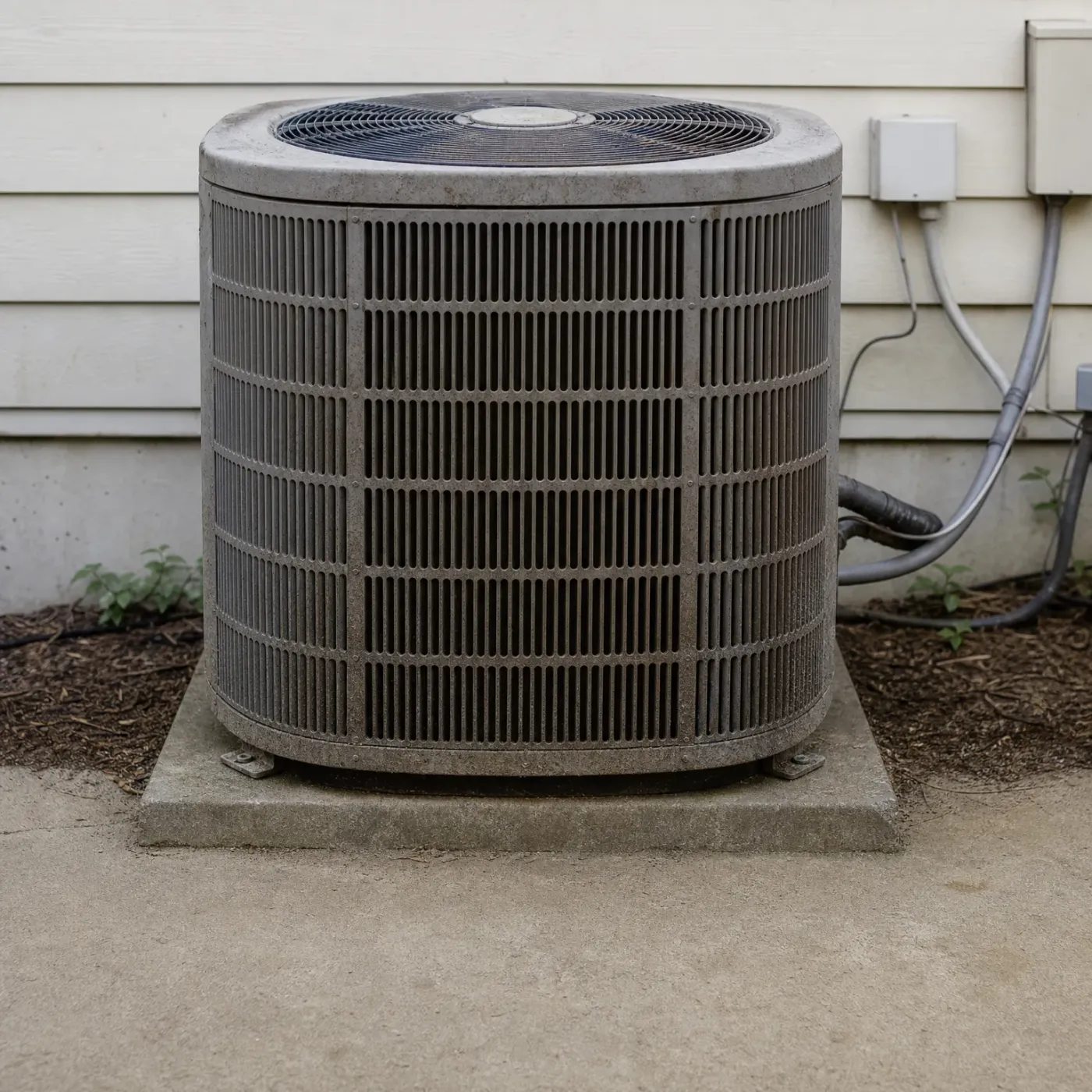
An outdoor air conditioner condenser unit with rust spots on its top grille sits on a concrete pad beside a house with light horizontal siding, with conduit lines and an electrical box on the wall and a mulch bed to the right.

Struggling through the cold

Rust on the fan grille, dirt packed around the base, a unit that looks like it's been fighting the weather for years. One sign it's losing the battle against a Pennsylvania winter: it runs constantly and the house still feels cool, or frost builds up on the coil and doesn't clear on its own.

Heat Pump Alone or Paired With Gas

Heat pump alone

  • Below about 20 to 25 degrees, most heat pumps lose capacity and lean harder on backup heat strips to keep the house at temperature.
  • Electric resistance backup costs more to run than the compressor itself, so a string of single digit nights shows up on the bill.
  • A heat pump sized and installed right for your house can still carry the load through a Pennsylvania winter without a backup system doing most of the work.
  • Defrost cycles kick in when ice builds on the outdoor coil, and during that cycle the system pulls heat from the house for a few minutes at a time.
  • No gas line, no combustion, no flue, which matters if your house was never set up for gas.
  • One system handles both your summer cooling and your winter heat, so there's only one piece of equipment to maintain.

Heat pump plus gas backup

  • A dual fuel setup switches to the gas furnace once outdoor temperatures drop below a set point, so the compressor isn't working against the coldest air.
  • Gas heat recovers a cold house faster than electric resistance strips, which matters on the nights it's well below freezing.
  • You're running two systems instead of one, so there are two things that can need service, a furnace and a heat pump.
  • Gas costs less to run than electric backup, which matters because power here isn't cheap.
  • This setup only makes sense if your house already has a gas line run to it.
  • The heat pump still does the cooling in summer and most of the mild-weather heating, so it's not sitting idle the rest of the year.
  1. Outdoor coil pulls heat out of cold outside air

  2. Refrigerant carries that heat inside under pressure

  3. Indoor coil releases the heat into your duct system

  4. Below a set outdoor temperature, backup heat strips kick in

A woman in a knitted shawl sits in a living room with a fireplace, shelves, a sofa with cushions, and a lamp by a bright window, looking off to the side.
A woman with long brown wavy hair in a green shirt over a white top stands in a living room with built-in white shelves, a ceiling fan, a potted plant and a sliding glass door.
A woman with shoulder-length gray-streaked hair in a light gray knit sweater stands smiling and looking off to the side in a living room with a sofa, houseplant, framed picture, and sunlit sliding glass door.
A woman with shoulder-length curly gray hair wearing a gray knit sweater stands near a window with a sheer curtain, looking to the side, with a blurred interior room behind her.

Stop chasing a heat pump pro

A heat pump sized and installed right for your house will hold its own through most of a Pennsylvania winter, and lean on backup heat strips only on the coldest nights. A heat pump sized wrong, or installed without attention to your ductwork and your home's heat loss, will lean on those strips far more than it should, and with power costs here, that shows up fast on the bill. The difference comes down to the install, not the equipment itself. Someone who works on heat pumps in this area all winter knows how low they tend to run before backup heat kicks in here, and what sizing actually holds up once the temperature drops. Sending this to one local contractor instead of several means the person looking at your situation is someone who already knows what a Pennsylvania winter asks of this equipment. If your heat pump is struggling, or you're putting one in and want it sized for what's actually ahead, that's worth getting in front of someone now.

Why sizing changes everything

A heat pump that's sized right for your house is picked using a load calculation, not a rule of thumb based on square footage. That calculation looks at your insulation, your windows, and how much duct runs through unheated space, then matches the equipment to what your house actually loses on a cold night. Oversize it and it short cycles, never running long enough to dehumidify in summer or hold steady heat in January. Undersize it and it runs constantly below freezing, leaning on backup strips more than it should. The contractor who does this calculation before quoting equipment is the one worth trusting with the install.

What the compressor type tells you

Not every heat pump handles cold the same way. A single stage compressor runs at one speed, full blast or off, and loses capacity faster as the temperature drops. A variable speed compressor adjusts its output to match what the house needs at that moment, which lets it keep producing useful heat at lower outdoor temperatures before backup strips have to step in. If you're installing new, ask what compressor type is going in and how its rated capacity holds up at 5 and at 0 degrees. Those two numbers tell you more than the brand name on the unit.

A woman and a child wrapped together in a knitted gray blanket on a couch, with the child's head resting on her shoulder and a lit table lamp and houseplant in the background.
An older woman with gray hair in a bun and glasses, wearing a beige knit sweater, smiles while looking to the side in a warmly lit kitchen, with a loaf of bread on the counter in the foreground and a snowy scene outside the window.

When the cold snap hits and the heat strips kick on every night for a week, you'll see it on your electric bill before the month is out.

A system sized for your house and your coldest nights keeps the people inside warm without leaning on backup heat any more than it has to.

An outdoor air conditioner condenser unit on a concrete pad beside a house with horizontal siding, with conduit, cables and an electrical box on the wall and mulch beds at either side.
Before you get your heat pump installation
A light gray outdoor heat pump unit mounted on a concrete pad beside a house with horizontal lap siding, with refrigerant lines and conduit running to a wall-mounted electrical box, gravel and a leafy shrub nearby.
After you get your heat pump installation

A heat pump sized for your house

Picked to match your home's heat loss, it keeps up on its own most nights and only calls on the heat strips when it's truly brutal out.

Find a licensed heat pump pro

A heat pump sized by guesswork

Undersized for your house, it leans on backup heat strips far more than it should, and you pay for that every time the power bill comes.

Find a licensed heat pump pro

Power costs 19.29 cents per kilowatt-hour statewide

At that rate, every hour the heat strips run costs real money, since they heat with electricity alone, no compressor to share the load. A system sized right for your house keeps those hours down to the coldest nights instead of a string of them.

EIA-861 2025 statewide residential average

A heat pump can keep up in a Pennsylvania winter when it's sized for your house and installed with care for your ductwork. That's the whole answer. What decides whether yours does is the work behind the install, not the brand on the unit. A contractor who works on heat pumps all winter, every winter, in your area knows which installs hold up through a week of single digit nights and which ones end up leaning on the heat strips more than they should. When you request a match through this page, you're connected with one licensed contractor local to you, not a handful of companies competing for your callback. That's someone who can look at your house, your ducts, and your heat loss, and size the system around what's actually there. You've read what separates a system that holds the temperature from one that struggles. The next step is getting someone who installs these for a living to look at your house and get it right the first time.

Sunlit corner of a room with a wooden sideboard holding a ceramic vase of olive branches and a dark wooden bowl, beside a white-framed window, a hardwood floor and woven rug.
A wooden cabinet holding a pale ceramic vase with leafy branches stands beside a beige wall in a sunlit room with hardwood floors, a jute rug, and a window showing green foliage outside.
Sunlit room corner with a beige upholstered sofa holding a rust-brown cushion, beside floor-length linen curtains at a window, over a wood floor with a woven rug.
Corner of a room with beige walls, a framed photograph, a floor-length linen curtain beside a window, an upholstered armchair with a knit pillow, white baseboards and trim, wood flooring and a pale rug.
Sunlit living room corner with a beige upholstered armchair with a cushion, linen curtains beside a wooden-framed window, green vertical panelled wall with a framed print, and a wooden table edge over a woven rug.

Finding a pro stops being your job

The pro who reaches out is licensed in Pennsylvania.

Get one local pro

There's no charge for the request.