Tell us about the job
Takes about a minute. No obligation.
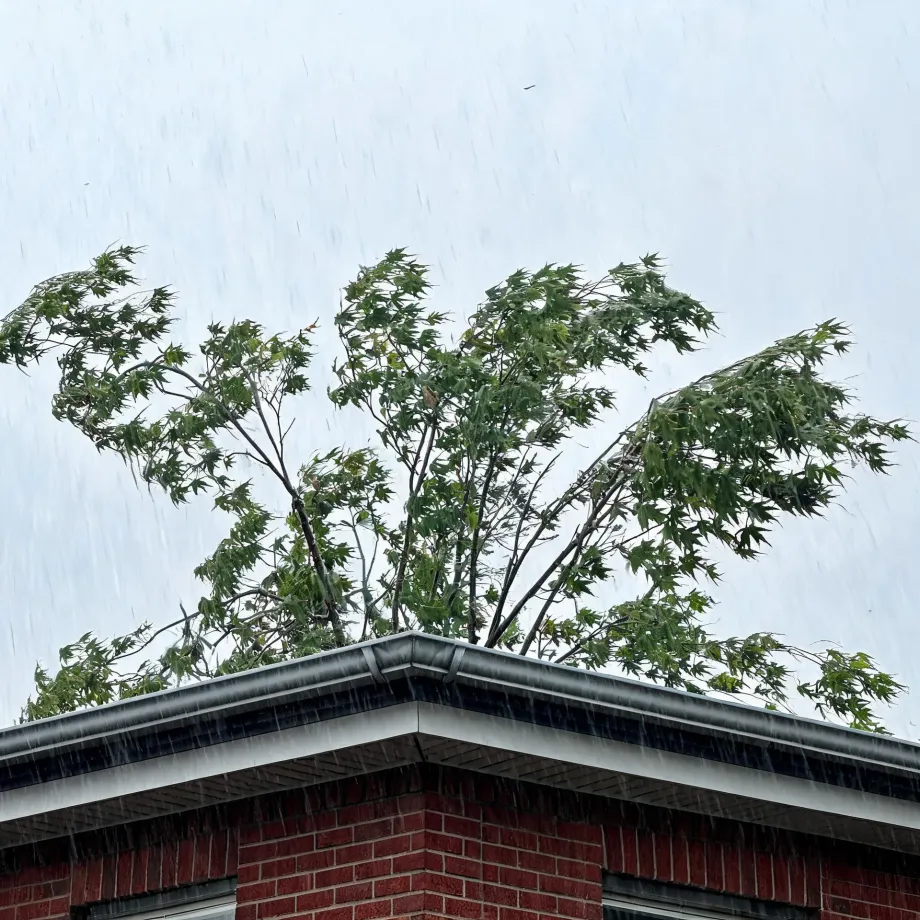
A contractor quoting a heat pump installation in Franklin County has to size for what the system will actually run against, not for catalog conditions. 111 severe weather events were recorded in Franklin County, Pennsylvania between 2015 and 2024. At that rate, severe weather is a standing feature of the operating environment, and a unit that fits the load on paper but leaves no margin for hard seasons will cycle harder, recover slower, and wear its refrigerant circuit faster than the specs suggest. Duct sealing, line-set routing, and equipment placement all become tighter decisions when the system will be pushed regularly. A contractor who has worked this area prices those details into the job from the start.
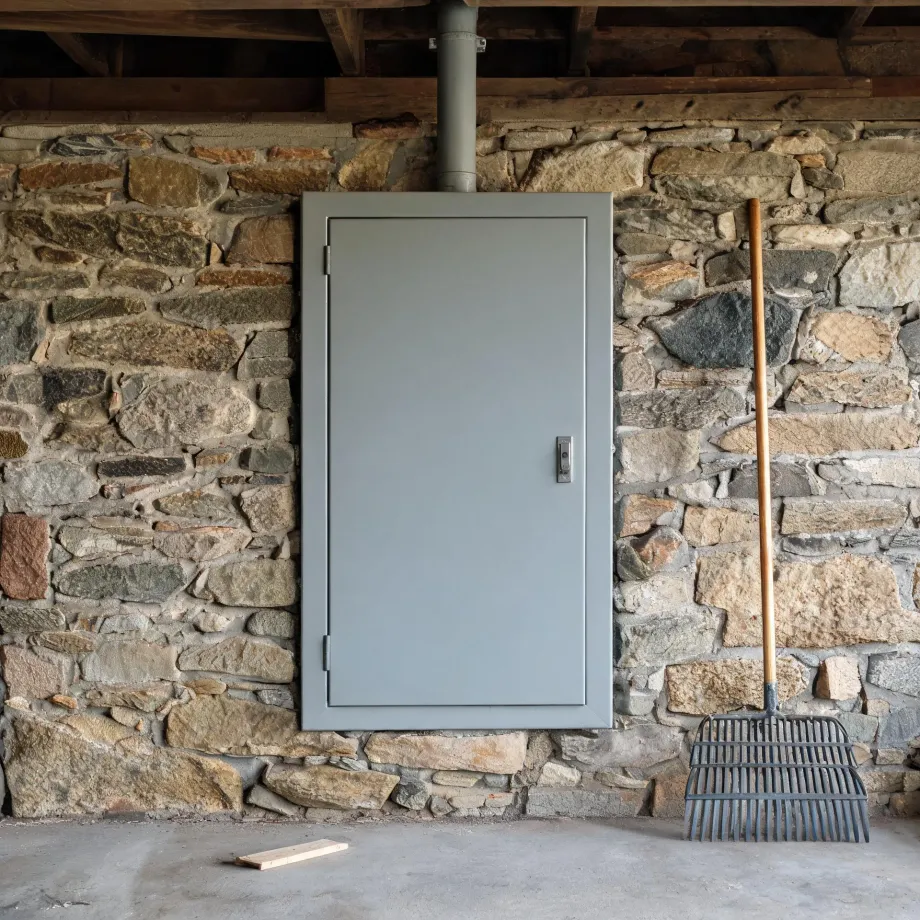
Ductwork laid down for a furnace or a central air system does not automatically carry what a heat pump asks of it. Half the homes in Franklin County, Pennsylvania were built in 1978 or earlier (2020-2024 ACS 5-year). That gap between when these houses were built and when heat pump systems became standard is where contractors spend the real diagnostic time on an installation job here: measuring static pressure, checking trunk sizes, and deciding what has to be modified before a new system can run at rated efficiency. The electrical panel gets the same scrutiny, since a service designed for earlier loads may need an upgrade before the new unit can be connected.
What Gets Installed With a New Heat Pump
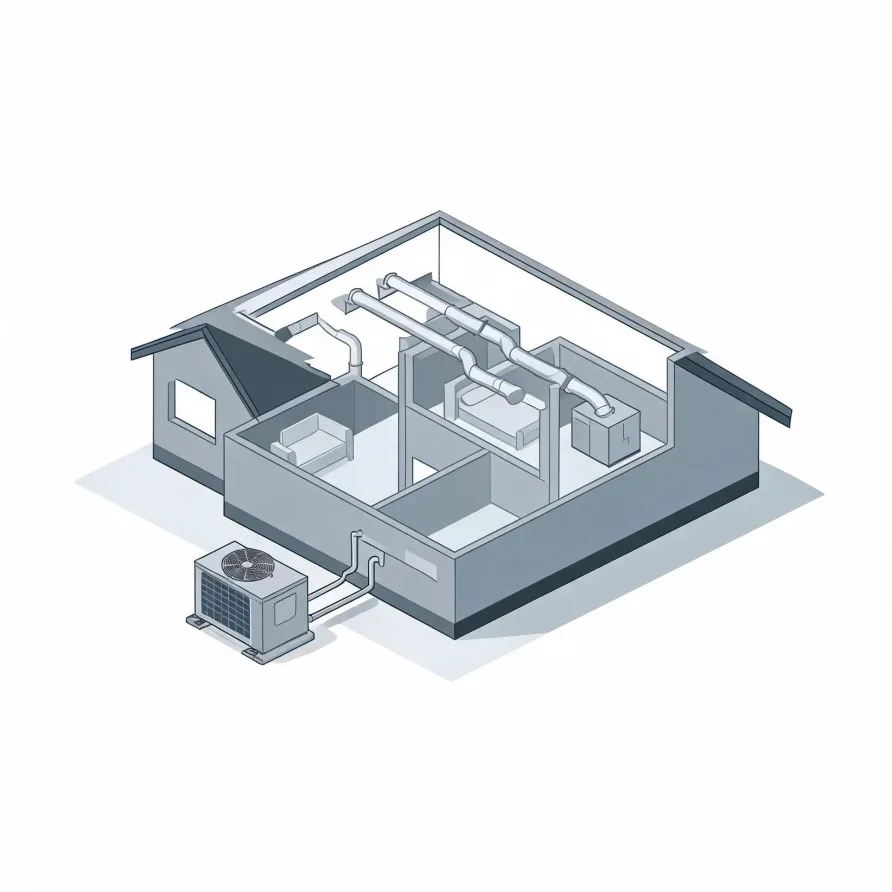
The outdoor unit sits on a pad beside the house and holds the compressor and the main coil. The indoor air handler mounts inside, usually in a utility closet, basement, or attic, and moves conditioned air through the home. These two units are the core of what a contractor brings to the job.
A refrigerant line set runs between the outdoor unit and the air handler, carrying the working fluid that makes the system function. A thermostat mounts on an interior wall and gives the homeowner control over the whole system. A condensate drain line runs from the air handler to a nearby drain to carry away moisture the coil pulls from the air.
The drawing alongside shows the general layout of these components, and a licensed contractor determines exactly how each one applies to your house.
Find a contractor in Franklin CountyFranklin County, PA, by the numbers
111 severe weather events were recorded in Franklin County, Pennsylvania between 2015 and 2024.
NOAA National Centers for Environmental Information, Storm Events Database, bulk CSV export, events 2015-01-01 through 2024-12-31.Half the homes in Franklin County, Pennsylvania were built in 1978 or earlier (2020-2024 ACS 5-year).
U.S. Census Bureau, 2020-2024 American Community Survey 5-Year EstimatesFranklin County, Pennsylvania holds 67,157 housing units (2020-2024 ACS 5-year).
U.S. Census Bureau, 2020-2024 American Community Survey 5-Year EstimatesOwners occupy 73.5% of the occupied homes in Franklin County, Pennsylvania (2020-2024 ACS 5-year).
U.S. Census Bureau, 2020-2024 American Community Survey 5-Year EstimatesRules & Standards Governing Heat Pump Installation in Franklin County, Pennsylvania3 sourced rules and standards
Licensing and Legal Requirements in Franklin County, Pennsylvania
Pennsylvania names the trade in its own definition: installing central heating or air conditioning is a home improvement under the Act, whether or not the equipment is affixed — so an HVAC installation is work the registration requirement reaches.
A Pennsylvania registration displaces the local one: no political subdivision may require a home improvement contractor to register, license or pay a fee on top of it, though building permits and local code enforcement still apply.
Pennsylvania requires home improvement contractor registration rather than a licence: nobody may hold themselves out as a contractor, or perform any home improvement, without first registering with the Bureau of Consumer Protection.
Severe Weather Events in Franklin County
Heating and cooling equipment in Franklin County works against whatever the local climate throws at it, and storm load is part of that picture. A heat pump sized and installed for actual local conditions holds up better than one spec'd for somewhere else.
111 severe weather events, 2015–2024. Source: NOAA National Centers for Environmental Information, Storm Events Database.