Tell us about the job
Takes about a minute. No obligation.
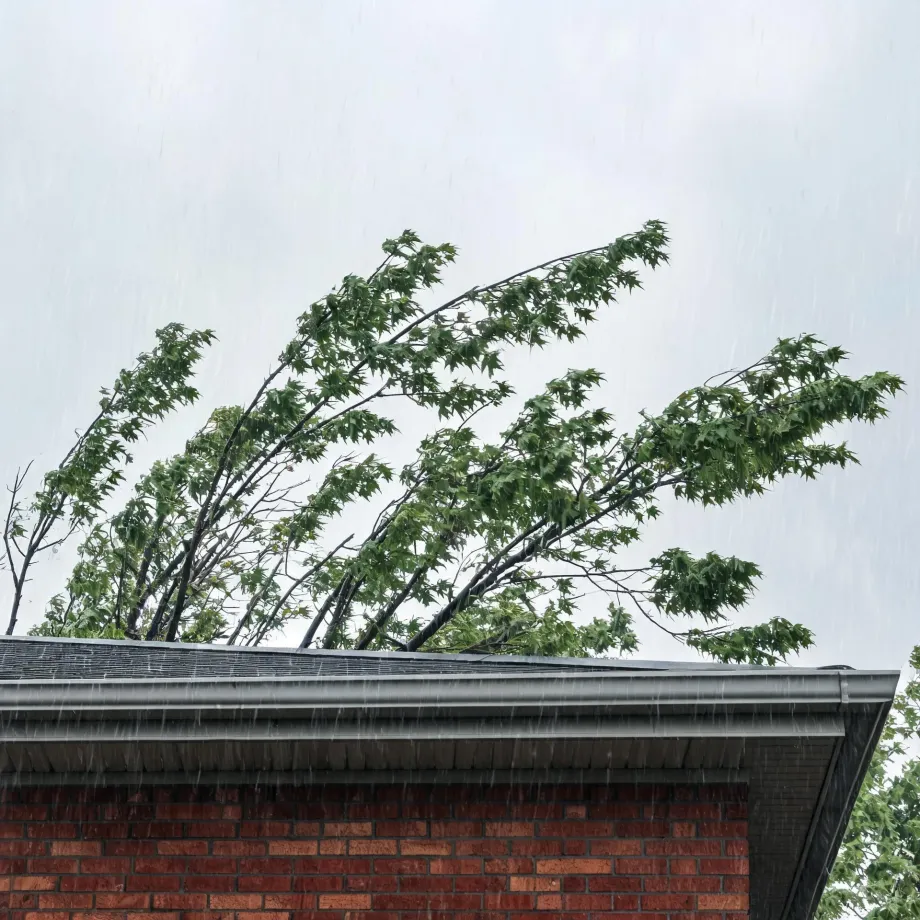
Sizing a heat pump for Erie County starts from what the system will be asked to do when conditions push hard, not from a catalog spec built around average loads. 185 severe weather events were recorded in Erie County, Pennsylvania between 2015 and 2024. A contractor quoting an install here has to work through that operating reality before settling on equipment capacity, because a unit that meets minimum output on a mild day can fall short when the weather asks more of it. Refrigerant circuit sizing, line set placement, and backup heat staging all get set at install time and cannot be adjusted cheaply afterward.
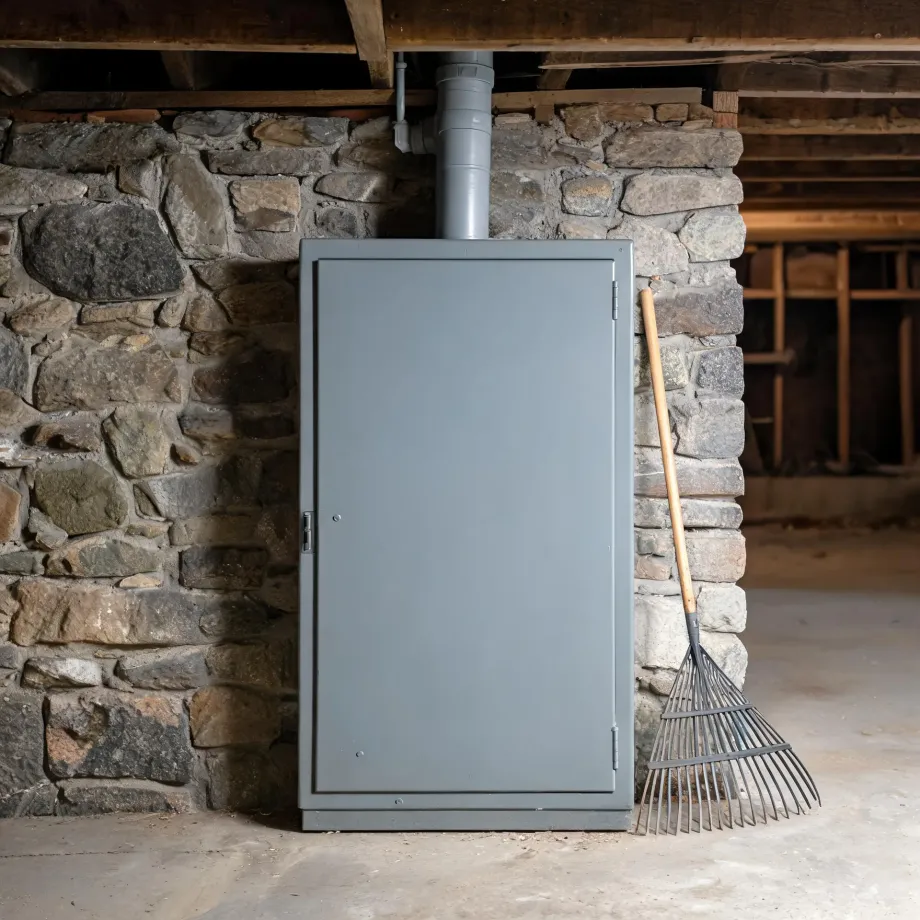
Ductwork laid in for an older furnace was designed around what that furnace needed, and a heat pump moves air differently. Half the homes in Erie County, Pennsylvania were built in 1964 or earlier (2020-2024 ACS 5-year). A contractor installing a heat pump in a house from that era has to look at what the existing duct system will actually carry before anything else gets priced, because undersized or poorly routed ducts will undercut the performance of any unit bolted to them. The electrical service gets the same scrutiny: what the panel was built to handle and what a heat pump draws are questions that get answered by opening the box, not by looking at the address.
What Gets Installed With a New Heat Pump
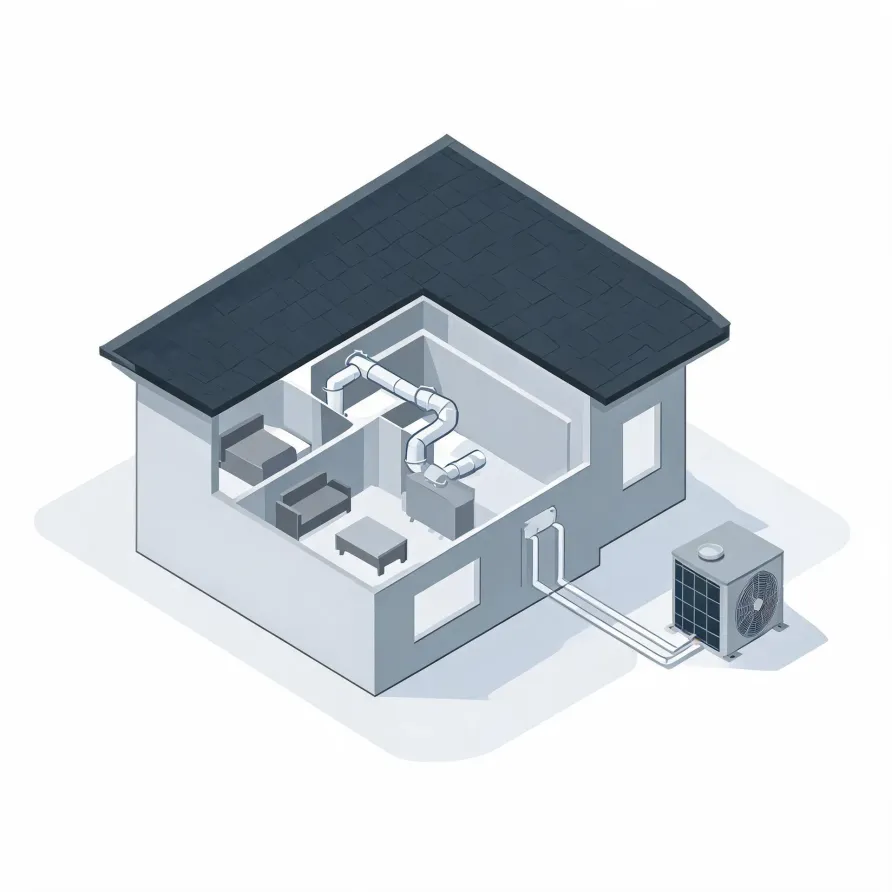
The outdoor unit is the piece a homeowner sees first, a cabinet that sits on a pad beside the house and holds the compressor and the outdoor coil. Inside, an air handler mounts in a utility space, a basement, or a closet and moves conditioned air into the home. These two units are what a contractor sets in place.
A refrigerant line set runs between the outdoor unit and the air handler, carrying the working fluid that makes the system function as one. A thermostat goes on an interior wall and gives the homeowner control over the whole system. Both are part of what a contractor connects during the installation.
The drawing shows a typical layout, and a licensed contractor determines exactly what the work involves for your house.
Find a contractor in Erie CountyErie County, by the numbers
185 severe weather events were recorded in Erie County, Pennsylvania between 2015 and 2024.
NOAA National Centers for Environmental Information, Storm Events Database, bulk CSV export, events 2015-01-01 through 2024-12-31.Half the homes in Erie County, Pennsylvania were built in 1964 or earlier (2020-2024 ACS 5-year).
U.S. Census Bureau, 2020-2024 American Community Survey 5-Year EstimatesErie County, Pennsylvania holds 120,111 housing units (2020-2024 ACS 5-year).
U.S. Census Bureau, 2020-2024 American Community Survey 5-Year EstimatesOwners occupy 68.1% of the occupied homes in Erie County, Pennsylvania (2020-2024 ACS 5-year).
U.S. Census Bureau, 2020-2024 American Community Survey 5-Year EstimatesCodes & Standards Governing Heat Pump Installation in Erie County, Pennsylvania3 sourced rules and standards
What Erie County, Pennsylvania Requires for This Work
Pennsylvania names the trade in its own definition: installing central heating or air conditioning is a home improvement under the Act, whether or not the equipment is affixed — so an HVAC installation is work the registration requirement reaches.
A Pennsylvania registration displaces the local one: no political subdivision may require a home improvement contractor to register, license or pay a fee on top of it, though building permits and local code enforcement still apply.
Pennsylvania requires home improvement contractor registration rather than a licence: nobody may hold themselves out as a contractor, or perform any home improvement, without first registering with the Bureau of Consumer Protection.
Severe Weather Events in Erie County
Heating and cooling equipment in Erie County works against whatever the local climate demands of it, and that demand is shaped by how hard the weather gets year to year. A heat pump sized and installed for local conditions holds up better than one that was not.
185 severe weather events, 2015–2024. Source: NOAA National Centers for Environmental Information, Storm Events Database.