Tell us about the job
Takes about a minute. No obligation.
A heat pump repair in Armstrong County starts with what the system has already been through. 156 severe weather events were recorded in Armstrong County, Pennsylvania between 2015 and 2024. At that rate, severe weather is part of normal operating life here, and a contractor pulling a unit apart expects to find wear patterns that reflect it. Refrigerant lines, capacitors, and outdoor coil connections take the brunt of repeated thermal and pressure swings. A contractor quotes accordingly, because a repair scoped without that history tends to miss the next failure before it happens.
Ductwork and wiring installed for earlier systems have been adapted over the decades, but the sharper question for a heat pump repair is what the opened unit actually contains and whether the manufacturer still makes it. Half the homes in Armstrong County, Pennsylvania were built in 1959 or earlier (2020-2024 ACS 5-year). A system running in a house of that age has often been updated piecemeal, which means a contractor opening the equipment may find components from different service generations layered together. When a part turns out to be discontinued or available only through specialty suppliers, the repair scope and the bill both change before the job is half done.
The Parts of a Heat Pump a Contractor Checks First
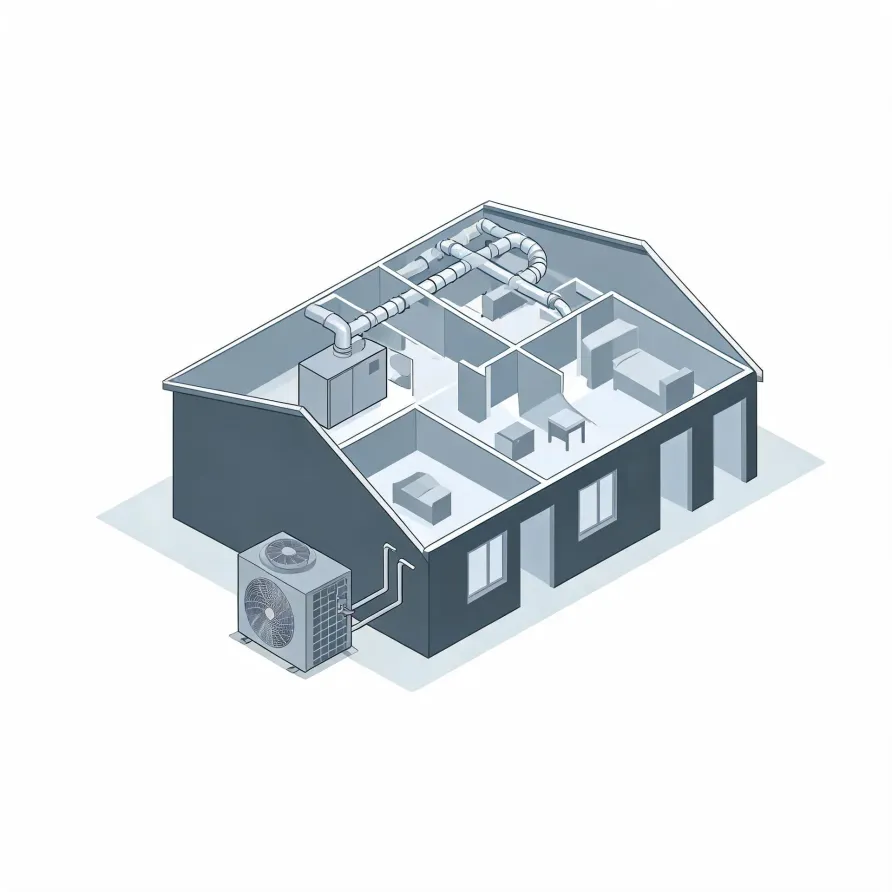
The outdoor unit is where most repair calls begin. It houses the compressor, which does the hardest mechanical work in the system, and the coil that sheds or pulls heat from the outside air. A failed compressor, a refrigerant leak, or a damaged coil will all show up here first.
Inside the house, the air handler holds the indoor coil and the blower that moves conditioned air through your home. The reversing valve, which sits in the refrigerant line, tells the system which direction to run. The thermostat and the expansion valve round out what a contractor traces when diagnosing a problem.
The drawing shows a typical heat pump layout, and a licensed contractor determines which components and conditions apply to your specific home.
Find a contractor in Armstrong CountyArmstrong County, by the numbers
156 severe weather events were recorded in Armstrong County, Pennsylvania between 2015 and 2024.
NOAA National Centers for Environmental Information, Storm Events Database, bulk CSV export, events 2015-01-01 through 2024-12-31.Half the homes in Armstrong County, Pennsylvania were built in 1959 or earlier (2020-2024 ACS 5-year).
U.S. Census Bureau, 2020-2024 American Community Survey 5-Year EstimatesArmstrong County, Pennsylvania holds 32,128 housing units (2020-2024 ACS 5-year).
U.S. Census Bureau, 2020-2024 American Community Survey 5-Year EstimatesOwners occupy 78.8% of the occupied homes in Armstrong County, Pennsylvania (2020-2024 ACS 5-year).
U.S. Census Bureau, 2020-2024 American Community Survey 5-Year EstimatesRules & Standards Governing Heat Pump Repair in Armstrong County, Pennsylvania3 sourced rules and standards
Licensing and Legal Requirements in Armstrong County, Pennsylvania
Pennsylvania names the trade in its own definition: installing central heating or air conditioning is a home improvement under the Act, whether or not the equipment is affixed — so an HVAC installation is work the registration requirement reaches.
A Pennsylvania registration displaces the local one: no political subdivision may require a home improvement contractor to register, license or pay a fee on top of it, though building permits and local code enforcement still apply.
Pennsylvania requires home improvement contractor registration rather than a licence: nobody may hold themselves out as a contractor, or perform any home improvement, without first registering with the Bureau of Consumer Protection.
Severe Weather Events in Armstrong County
Extreme weather puts heat pumps under sustained stress, and how hard that equipment works over time shapes what repairs it will eventually need. Armstrong County's weather record is part of what makes HVAC service here a local question, not a generic one.
156 severe weather events, 2015–2024. Source: NOAA National Centers for Environmental Information, Storm Events Database.