Tell us about the job
Takes about a minute. No obligation.
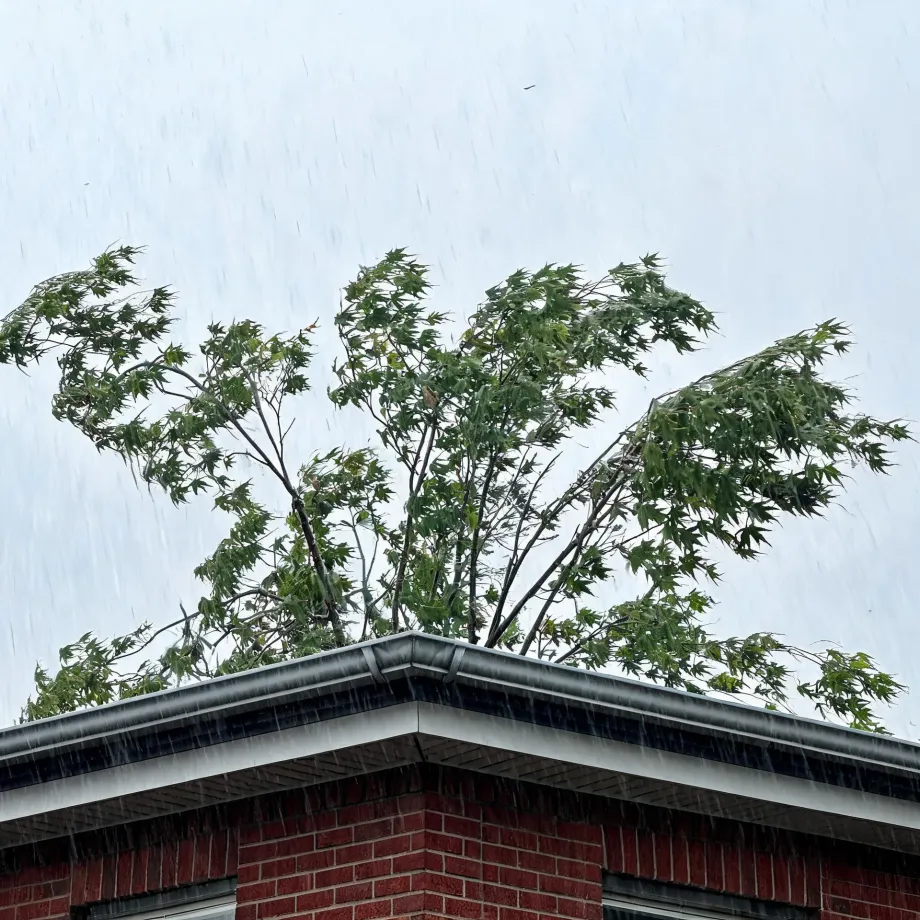
A heat pump repair here starts with a question a contractor has to answer before touching parts: how much of what failed is wear from genuine strain, and how much is just age and deferred maintenance. 177 severe weather events were recorded in Lackawanna County, Pennsylvania between 2015 and 2024. At that rate, severe weather is a standing condition in this county, not a rare event, and it shows up in the equipment. Refrigerant lines, capacitors, and outdoor coils all carry that load over years. A contractor who skips that history risks replacing a part that will fail again for the same reason.
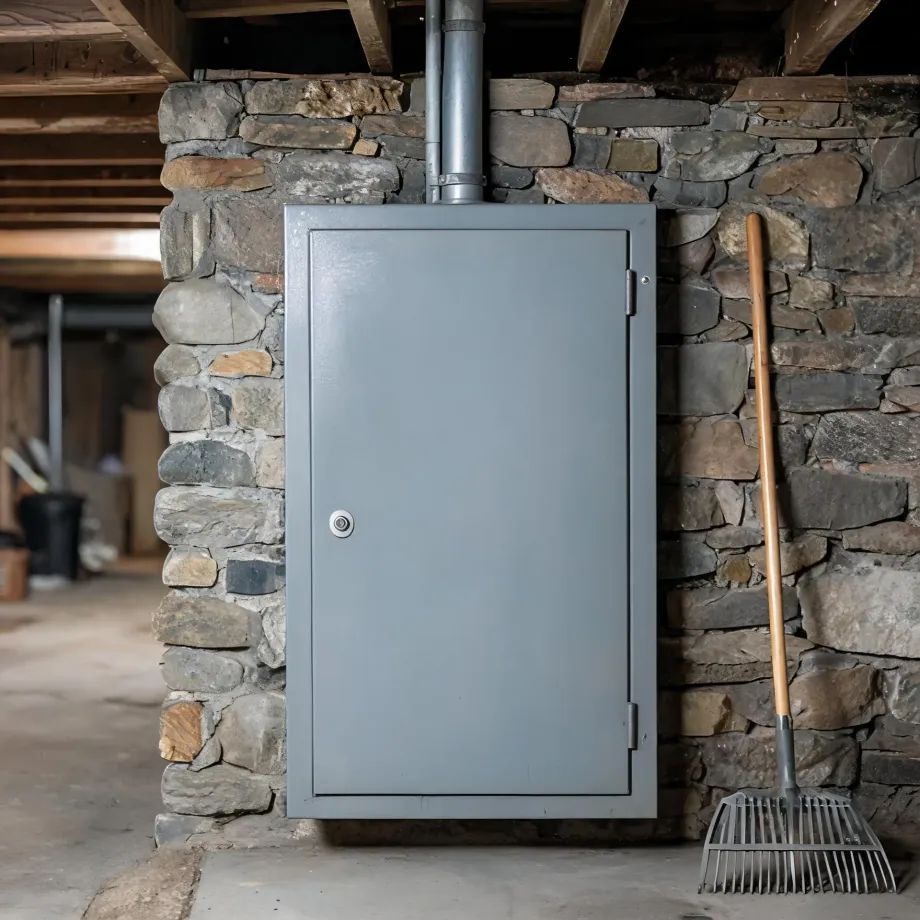
Housing built for a different era of mechanical systems carries that history inside it. Half the homes in Lackawanna County, Pennsylvania were built in 1955 or earlier (2020-2024 ACS 5-year). A heat pump running in a house that old has likely been serviced, retrofitted, and partially replaced across its life, which means the opened unit can hold components from different generations. What a contractor finds when the panels come off determines whether the repair is a parts order or a decision about what to do when those parts are no longer made.
The Parts of a Heat Pump a Contractor Checks First
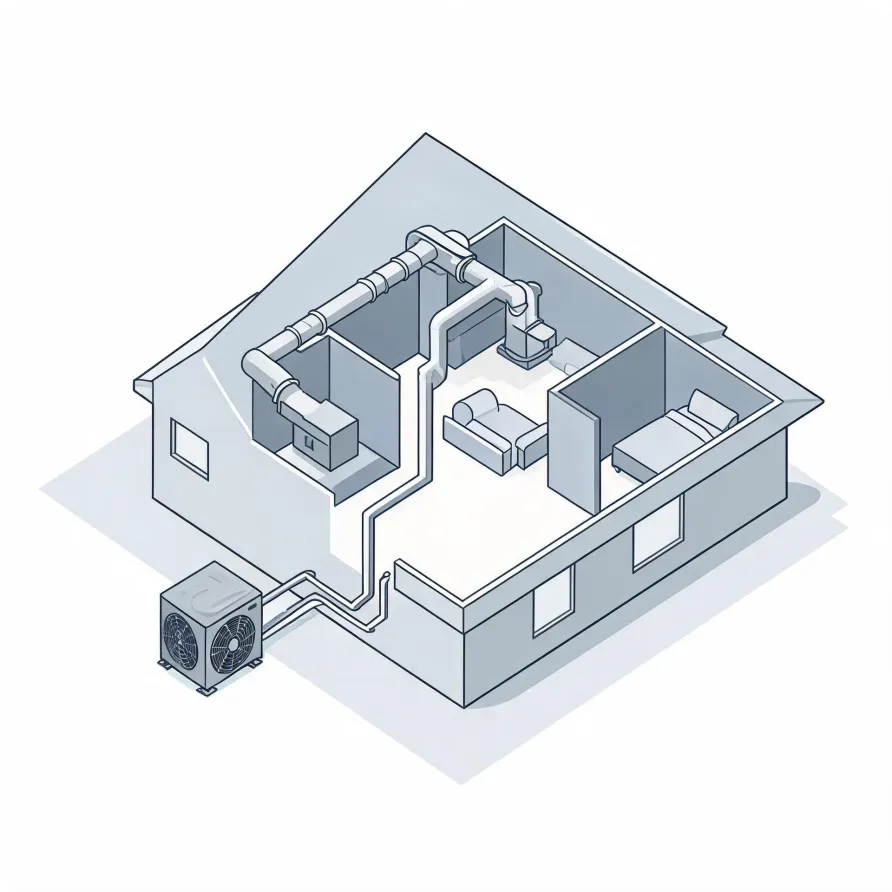
The outdoor unit is the piece most homeowners recognize: a metal cabinet that sits on a pad beside the house and holds the compressor and one set of coils. The compressor is the part contractors look at early, since a heat pump that runs but moves no heat often traces back there. The coils alongside it are another first stop, because damage or heavy fouling shows up fast.
Inside the house, the air handler hangs in a utility closet, basement, or attic and holds a second coil set, a blower fan, and the reversing valve that lets the system switch between heating and cooling modes. The refrigerant lines connecting both units run between them, and a fault anywhere along that path changes what a contractor finds at either end.
The drawing shows a typical layout, and a licensed contractor determines which components apply and what attention each needs in your specific home.
Find a contractor in Lackawanna CountyLackawanna County, by the numbers
177 severe weather events were recorded in Lackawanna County, Pennsylvania between 2015 and 2024.
NOAA National Centers for Environmental Information, Storm Events Database, bulk CSV export, events 2015-01-01 through 2024-12-31.Half the homes in Lackawanna County, Pennsylvania were built in 1955 or earlier (2020-2024 ACS 5-year).
U.S. Census Bureau, 2020-2024 American Community Survey 5-Year EstimatesLackawanna County, Pennsylvania holds 100,177 housing units (2020-2024 ACS 5-year).
U.S. Census Bureau, 2020-2024 American Community Survey 5-Year EstimatesOwners occupy 65.4% of the occupied homes in Lackawanna County, Pennsylvania (2020-2024 ACS 5-year).
U.S. Census Bureau, 2020-2024 American Community Survey 5-Year EstimatesRules & Standards Covering Heat Pump Repair in Lackawanna County, Pennsylvania3 sourced rules and standards
Licensing Rules for HVAC Repair in Lackawanna County, Pennsylvania
Pennsylvania names the trade in its own definition: installing central heating or air conditioning is a home improvement under the Act, whether or not the equipment is affixed — so an HVAC installation is work the registration requirement reaches.
A Pennsylvania registration displaces the local one: no political subdivision may require a home improvement contractor to register, license or pay a fee on top of it, though building permits and local code enforcement still apply.
Pennsylvania requires home improvement contractor registration rather than a licence: nobody may hold themselves out as a contractor, or perform any home improvement, without first registering with the Bureau of Consumer Protection.
Severe Weather Events in Lackawanna County
Extreme weather puts heat pumps under stress they were not sized to ignore. How often that happens in Lackawanna County shapes how hard local equipment works and how quickly wear adds up.
177 severe weather events, 2015–2024. Source: NOAA National Centers for Environmental Information, Storm Events Database.