Why your heat pump won't turn on in Pennsylvania

Step 1 of 3: Equipment

Why won't my heat pump turn on?

You go to the thermostat and nothing happens. The outdoor unit sits quiet, the indoor fan won't kick on, and you're left wondering if it's something simple or the start of a bigger repair. In Pennsylvania, with gas heat backing up a lot of homes, a dead heat pump feels less urgent in January than it would elsewhere, but you still want it sorted before it becomes a bigger job or shows up on the electric bill.

Usually a tripped breaker, a dead thermostat, or a failed component inside the unit

Most of the time the system itself isn't broken, something upstream of it is. A breaker can trip from a power blip, a thermostat can lose its own power or settings, and either one will leave the heat pump looking completely dead. If the breaker holds and the thermostat has power, the problem is likely inside the unit itself, a failed capacitor, a bad contactor, or a control board that stopped sending signal. Pennsylvania's electric rates make it tempting to assume a bill issue, but that's a separate thing from the unit not starting at all. A heat pump that won't turn on is worth checking before a cold stretch forces you onto backup heat you didn't plan for.

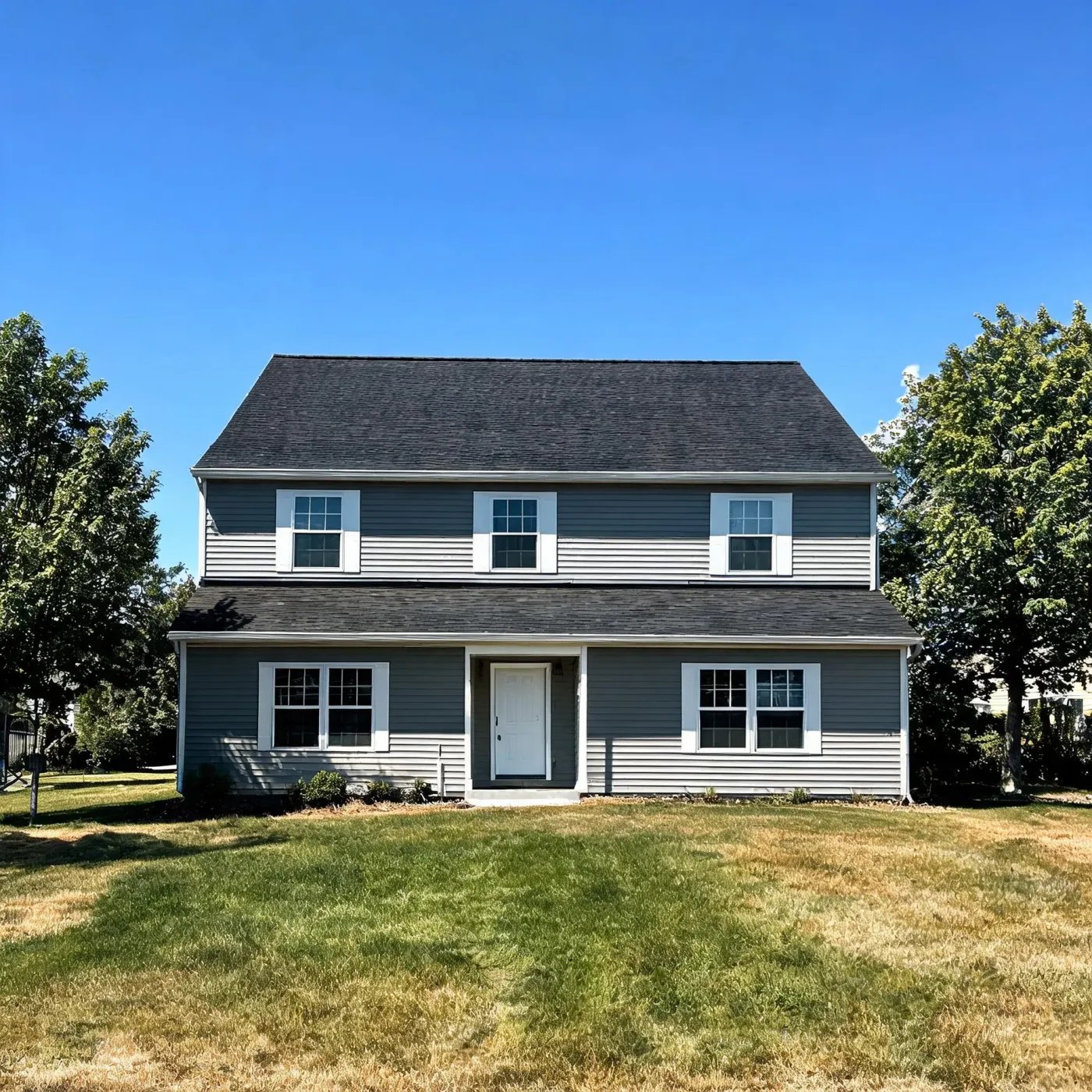
A two-story house with gray and light gray siding, white-trimmed windows and a white front door, flanked by deciduous trees, with a partly browned lawn in front under a clear blue sky.

Summer air here sits at a dew point around 61°F on average, measured across June, July and August. That's heavy air, and your heat pump has to pull moisture out of it every time it runs in cooling mode. A unit that's already struggling, a weak capacitor, a low charge, a dirty coil, works harder against air like that and is more likely to trip out or stall instead of starting. If your heat pump won't turn on during a sticky stretch, the thick air isn't the cause, but it's often what pushes a borderline part past the point where it can still do the job.

NASA POWER T2MDEW county cells weighted by homes

Is this just a tripped breaker, or something worse?

Check the breaker first. If it's tripped and resets clean, you may be fine for now. If it trips again, something's pulling too much current and that won't fix itself. Beyond the breaker, look for what you can actually sense. A clicking sound from the outdoor unit with no fan movement. A faint burning smell near the indoor air handler. Ice on the outdoor coil even though it's not that cold out. A thermostat screen that's blank or won't respond to any button. None of these mean you have to guess. Each one points somewhere specific, and the ones involving smell or ice are worth not sitting on, since running a failing unit repeatedly can push a small part failure into a bigger one.

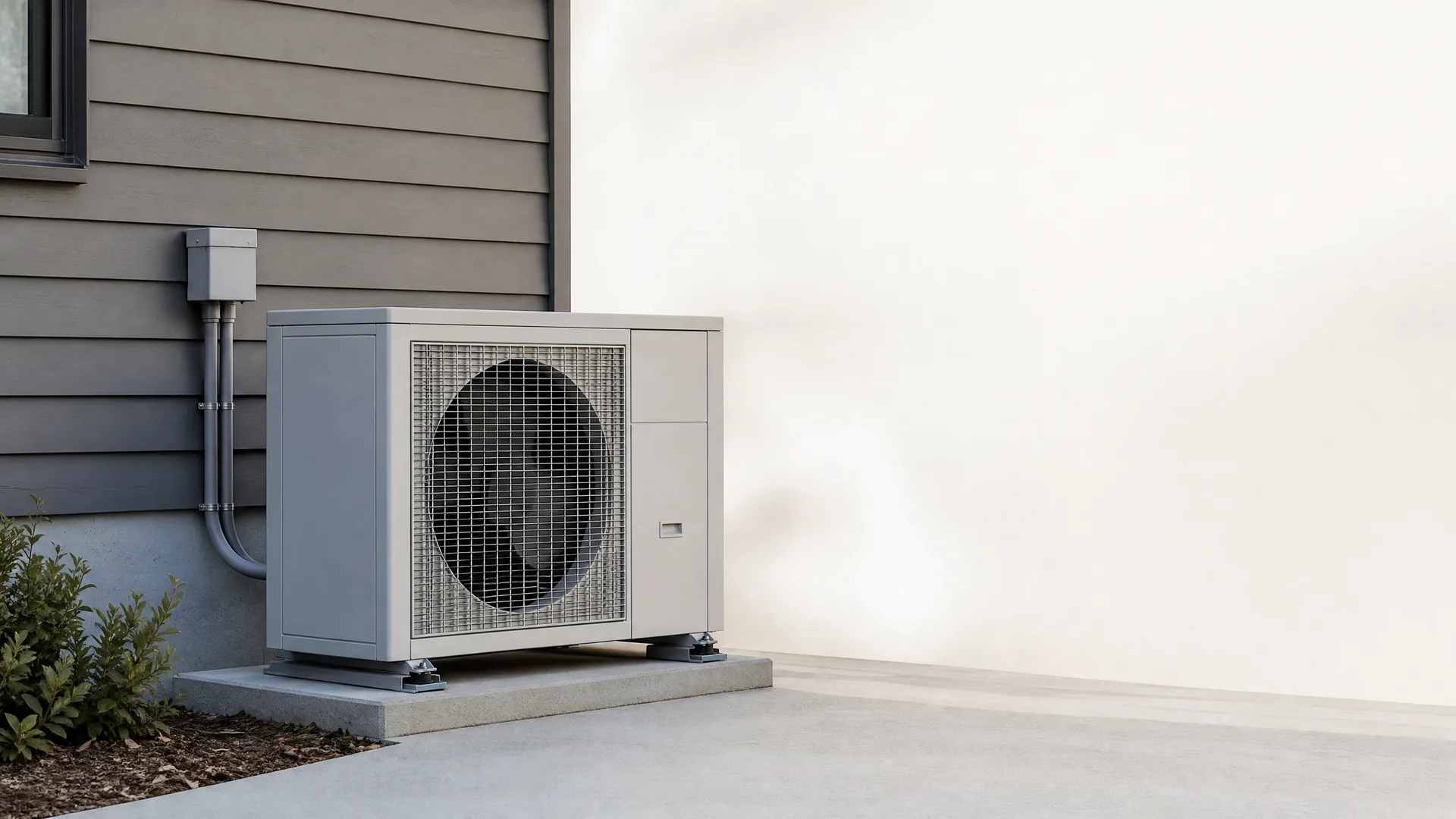
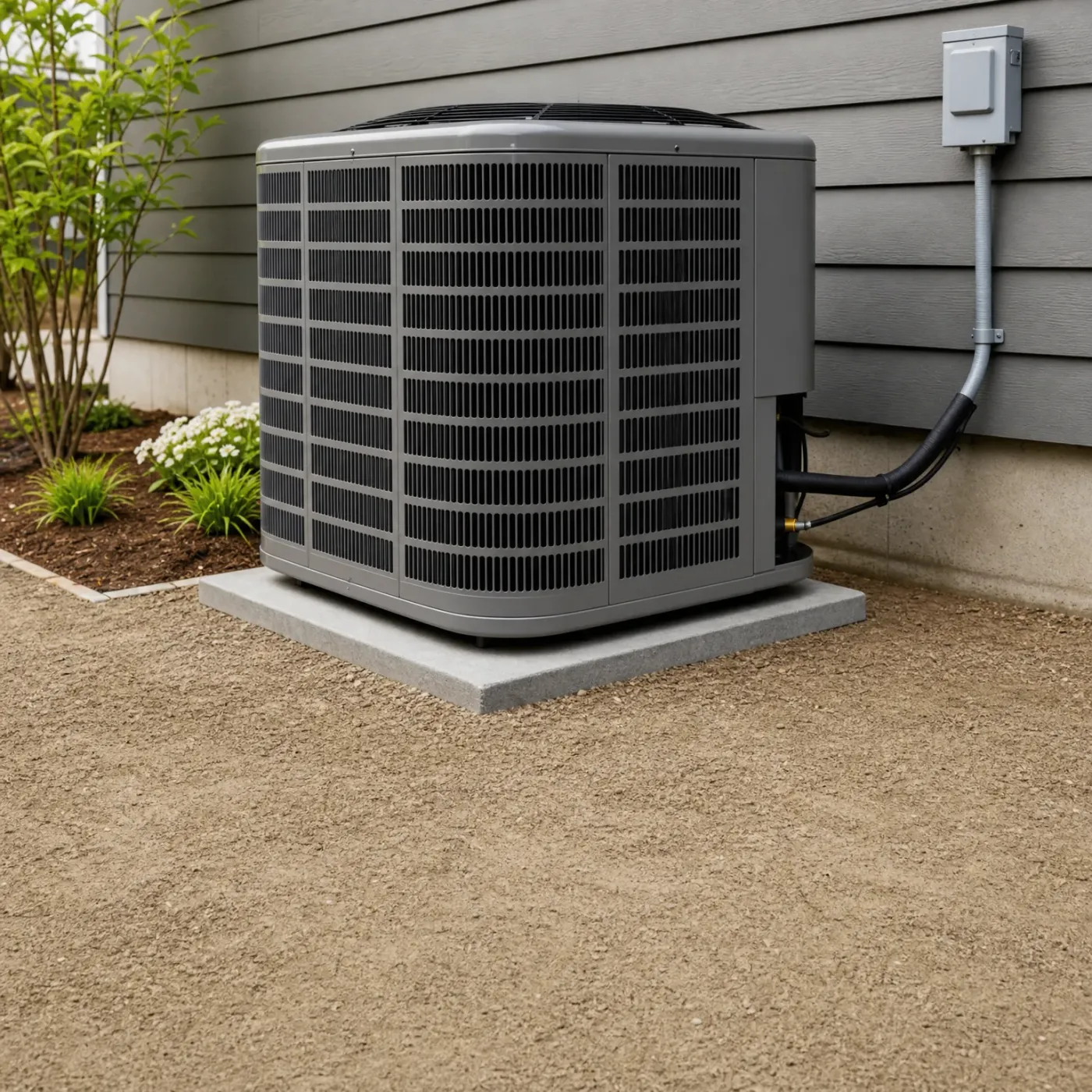
A gray outdoor heat pump unit on a concrete pad beside a house with gray horizontal siding, with conduit and an electrical box on the wall and a shrub at left.

When it's worth a quick check

A heat pump that won't start sometimes has a simple cause. A dead thermostat battery, a reset breaker, a dirty filter choking the airflow until the unit shuts itself off. These take a few minutes to look at and nothing special to find. If you catch it here, you're done. No part was failing, nothing was drawing current it shouldn't, the system just needed a nudge to get going again.

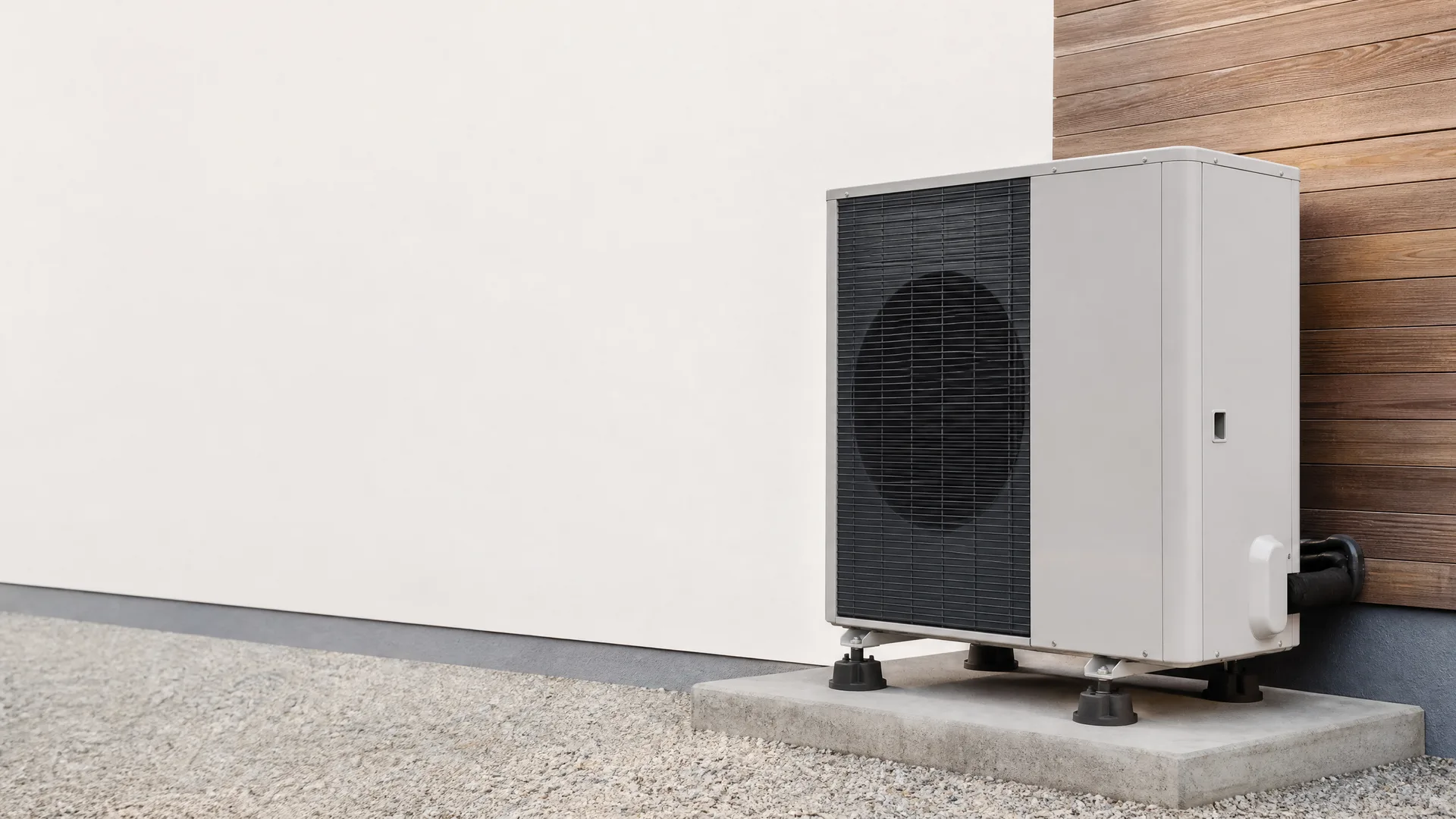
An outdoor air-source heat pump unit with a dark grille stands on a concrete pad beside a white wall and wood-clad facade, surrounded by gravel.

When it's more than that

If the breaker keeps tripping, or the outdoor unit hums but never starts, or it ran fine yesterday and won't today for no reason you can see, that's a part failing somewhere in the system. A capacitor, a contactor, a control board. Pennsylvania winters ask a lot of a heat pump, and a unit that's been struggling quietly for weeks can pick the coldest night to finally stop. That's not something to wait out.

Fix It Now or Call It In

Check it yourself

  • A dead thermostat battery looks exactly like a dead heat pump, and it costs nothing to swap.
  • Flip the breaker off, wait a few seconds, then flip it back on; if it holds, you're running again.
  • Pull the filter and hold it up to a light. If you can't see through it, air can't get through it either.
  • Some outdoor units have their own disconnect box on the wall nearby. Check that it's pushed in all the way.
  • A thermostat set to 'heat' but with the fan switch on 'off' instead of 'auto' will sit there doing nothing.

Call a contractor

  • A breaker that trips a second time after resetting means something is drawing too much current, and that's not a filter problem.
  • If the outdoor unit hums but the fan blade doesn't spin, the capacitor is likely failing and won't fix itself with time.
  • Ice on the outdoor coil in weather that isn't freezing points to a refrigerant or airflow problem a gauge set can confirm.
  • A reversing valve stuck in one position will leave you with no heat at all even though the system powers on fine.
  • If the indoor fan runs but no air moves at the vents, something downstream of the blower needs a licensed look.
  • A unit that short cycles, turning on and off every few minutes, is wearing down parts that get more expensive the longer it runs that way.
A gray outdoor condenser unit on a concrete pad beside a house with horizontal lap siding, with an electrical disconnect box and insulated refrigerant lines on the wall, gravel in the foreground and a planting bed at left.

Running normally

The outdoor unit cycles on and off through the day without you noticing. The disconnect box up on the wall stays untouched, the lines are clean, and nothing around the pad looks out of place. This is what lets it handle a muggy Pennsylvania summer without a second thought.
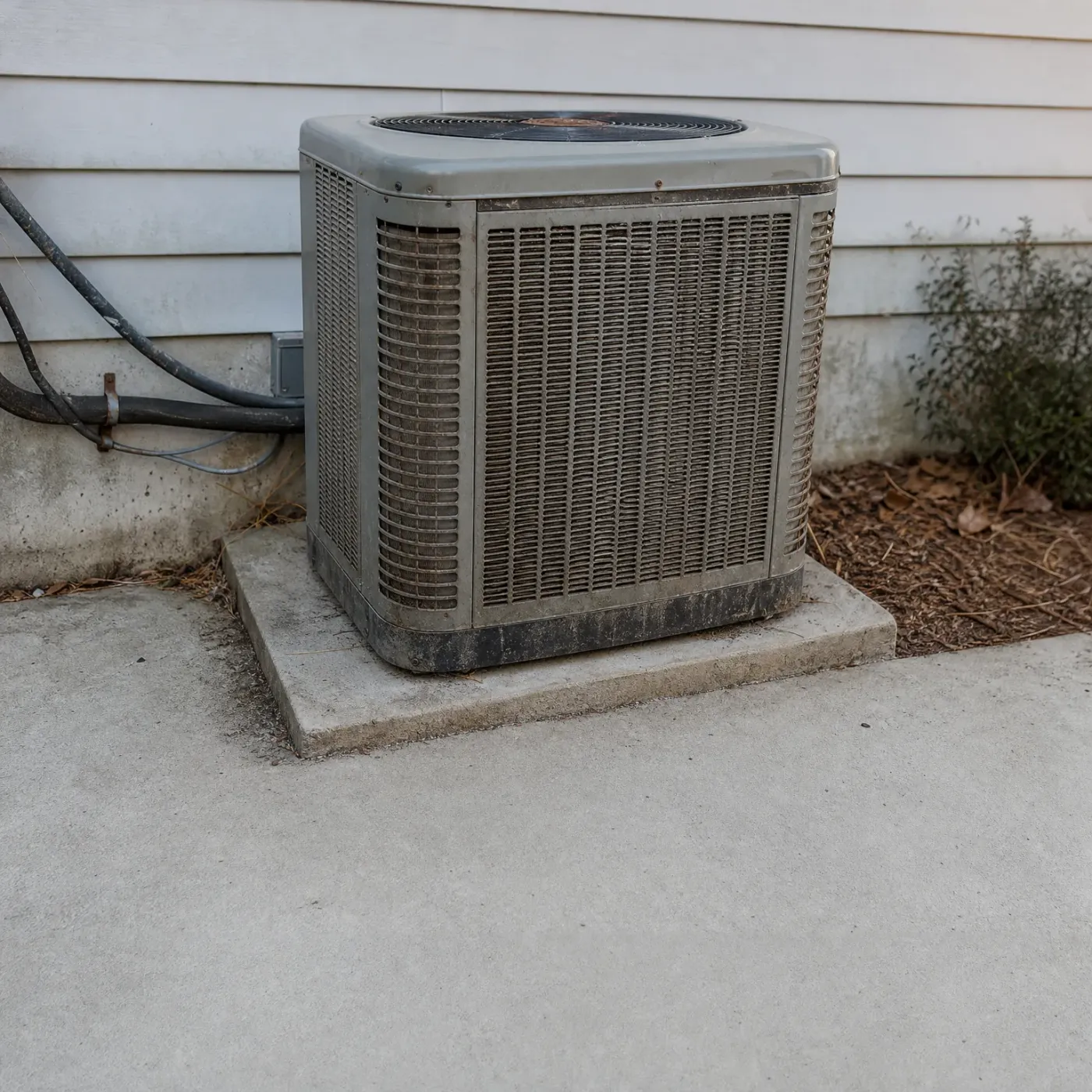

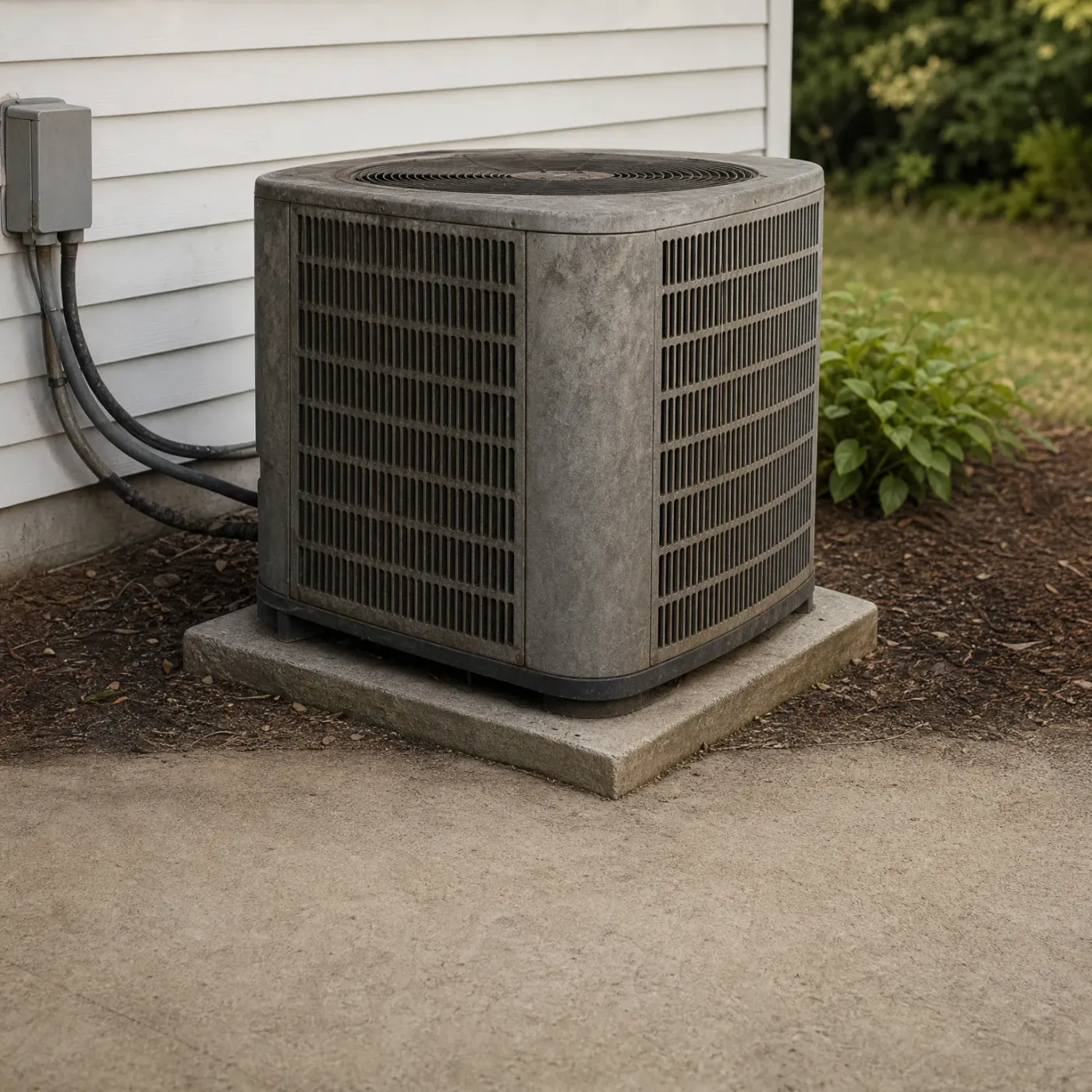
A weathered gray outdoor condenser unit sits on a concrete pad beside a house with horizontal siding, with refrigerant lines entering the wall at left and a mulched shrub bed at right.

Headed for trouble

Dirt and grime cake the fins and base until the unit can't shed heat the way it needs to. It has to work harder to do the same job, pulling more power at a time when electricity here already costs plenty. Left alone, that strain is often what ends in a unit that won't start at all.

A bearded man in a blue and brown plaid flannel shirt stands indoors looking out a window at snow-covered trees, with a ceramic mug on the windowsill.
A man in a blue T-shirt sits on a light gray sofa, laughing while looking at an open laptop in the foreground, with a framed picture, lamp and potted plant behind him.

Get the right pro for your heat pump

If you've gone through the breaker, the thermostat battery, the filter, and the unit still won't start, that's not a weekend project anymore. A heat pump that won't come on could mean a failed control board, a bad capacitor, a stuck contactor, or a refrigerant problem, and guessing wrong means paying twice. With gas heat backing up most homes here, a dead heat pump in July is mostly an AC problem, and Pennsylvania summers don't give you much patience for a system that won't cool. Every day it sits dead is a day of heavy, muggy air sitting in your house with nowhere to go. A contractor who works on heat pumps regularly can open the panel and know in minutes what's actually wrong, instead of you pulling parts and hoping. Send the request and let someone who does this for a living take over from here. That part of it doesn't have to be yours anymore.

A heat pump that won't start draws almost nothing, but one that's cycling hard trying to catch up on a humid day pulls a steady load for hours. That's where a weak component gives out.

Pennsylvania's grid rates are already high, and a unit struggling against summer humidity runs longer to do the same job. The part that fails under that strain is usually the one you can't see from the pad.

A woman in a cream cowl-neck sweater stands in a lamp-lit room looking out a window at a snow-covered yard with shrubs and bare trees at dusk.
A woman in a gray turtleneck sweater stands near a large window in a lamp-lit living room, looking out at falling snow and snow-covered conifers.
A woman in a chunky knit sweater stands by a large window looking out at snow-covered ground, with a dimly lit living room containing a gray sofa, framed artwork, shelves and table lamps behind her.
A woman in a gray turtleneck sweater stands in a dimly lit living room with a lamp and bookshelves, looking out a multi-pane window at falling snow.

Your thermostat doesn't run the heat pump directly. It sends a small signal, 24 volts, to tell the system what you want. That signal has to reach the control board first, and the board checks that nothing is wrong before it passes the call along. If a safety switch tripped somewhere in the system, the board holds everything still even though the thermostat thinks it already asked. From there, a contactor out at the condenser has to pull in and close the circuit before the compressor sees any power at all. If that switch won't close, the outdoor unit stays silent no matter what the thermostat shows. Assuming the contactor closes, the compressor and fan motor still need a jolt to get spinning, and that comes from the capacitor. A weak one won't fail outright, it'll just leave the unit humming instead of starting. Add in the reversing valve, which decides whether you get heat or cooling, and a low pressure switch that shuts things down to protect the compressor, and you can see how many places along that path can stop a call for heat before it ever becomes warm air.

How the call to start travels

  • The thermostat calls for heat or cooling by sending a low voltage signal, usually 24 volts, down to the air handler and outdoor unit.
  • That signal has to pass through a control board before anything moves, and a tripped safety switch on the board will block it even if everything else is fine.
  • The outdoor unit won't start without the contactor pulling in, a small switch that clicks closed to let power through to the compressor.
  • A capacitor gives the compressor and fan motor the jolt they need to start spinning, and a weak one can leave the unit humming instead of running.
  • Reversing valves let a heat pump switch between heating and cooling, and a stuck valve can keep the system from responding to either call.
  • Most outdoor units have a low pressure switch that shuts the compressor down if the refrigerant charge drops too low to protect it from damage.
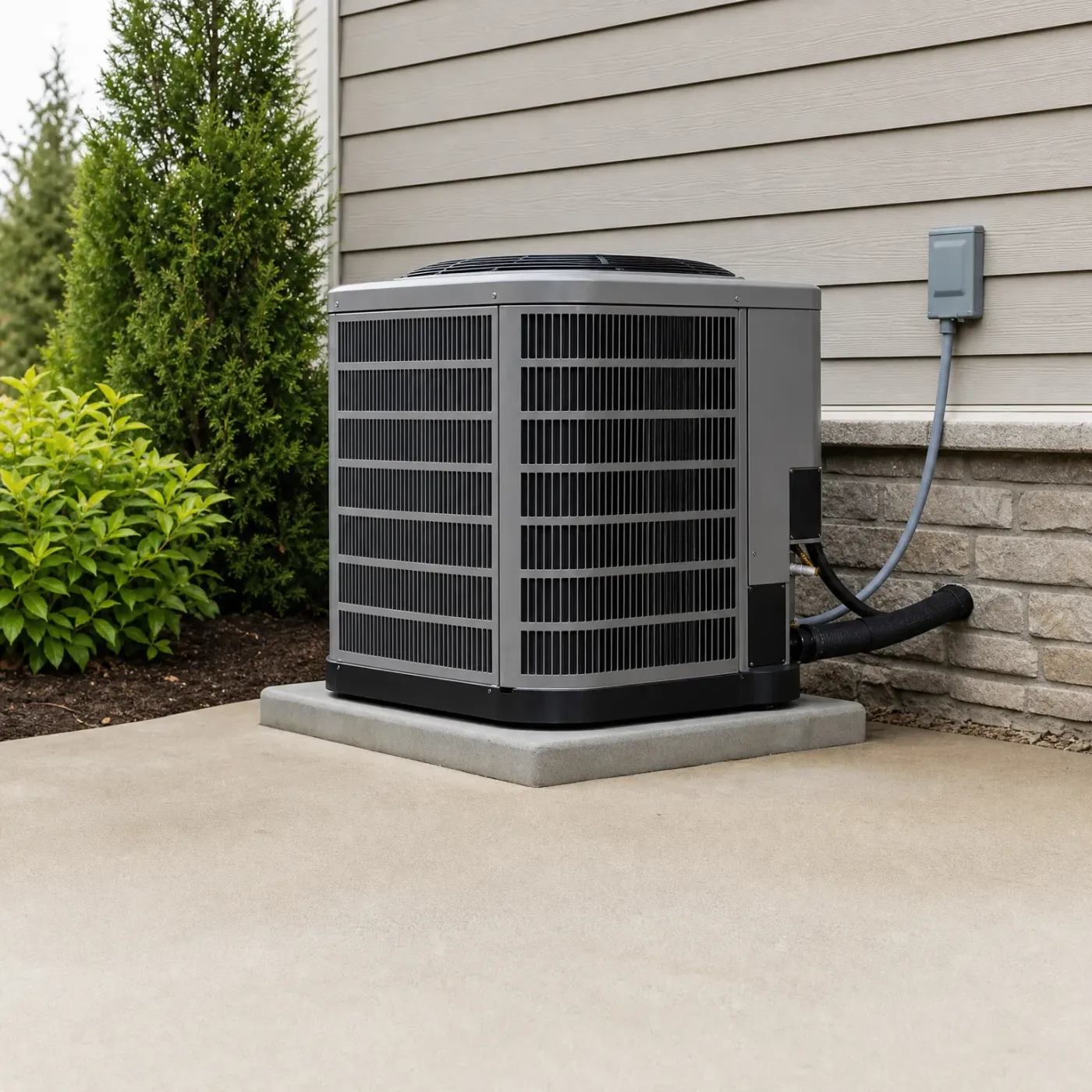
A gray outdoor air conditioner condenser unit on a concrete pad beside a house with horizontal lap siding and a stone veneer base, with a conduit running to a wall-mounted disconnect box and shrubs and evergreen trees to the left.
A clean setup like this starts without a fight, lines tight and the disconnect box untouched since it went in.
An outdoor air conditioning condenser unit sits on a concrete pad beside a white horizontal-siding house, with a gray electrical disconnect box and insulated refrigerant lines on the wall, mulch and green shrubs to the right, and a concrete slab in the foreground.
An older unit like this has more that can fail, and conduit or lines showing their age are worth a second look.

Power costs 19.29 cents per kilowatt-hour statewide

At 19.29 cents per kilowatt-hour, every hour your heat pump sits there trying and failing to start, drawing power without running right, adds up fast. A unit that won't turn on at all is at least not costing you anything while it's dead.

EIA-861 2025 statewide residential average

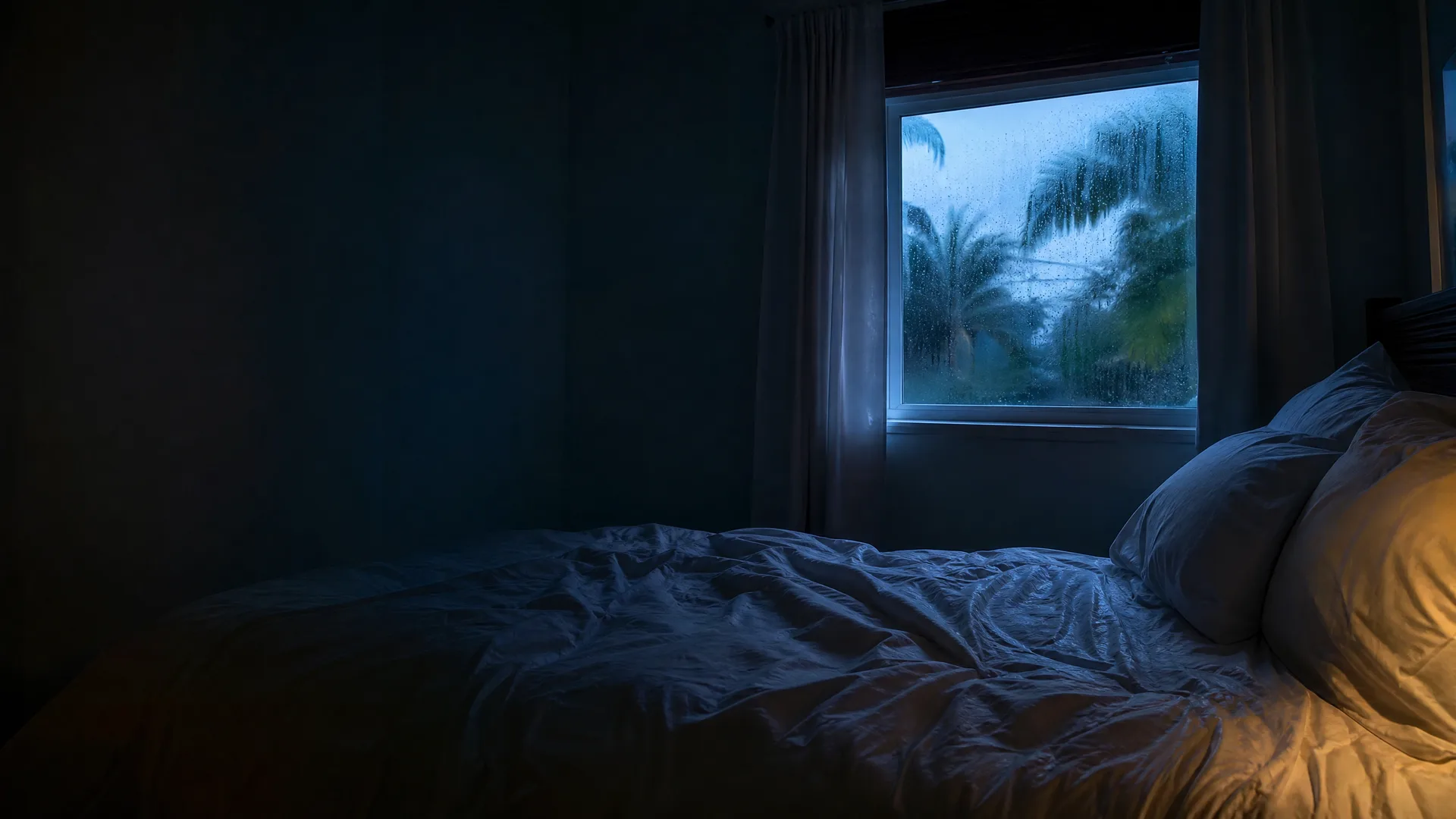
A dark bedroom with an unmade bed and pillows beside a curtained window showing rain-streaked glass and palm foliage outside.

It's past midnight and the sheets are damp against your legs. You kicked the comforter to the floor an hour ago and it hasn't helped. The window above the bed has a thin ring of fog at the corners where the humid air outside meets the cool glass, except the glass isn't cool anymore. You can hear the ceiling fan ticking but it's just pushing the same thick air around the room. Somewhere downstairs the thermostat is set to 70 and has been for a while. You already know what you'll find if you get up and check it. The outdoor unit isn't running. It hasn't been running.

A smiling man in a denim shirt and white t-shirt stands in an open dark doorway of a stucco house, facing a woman with long brown hair and a green jacket seen from behind in the foreground.

Where that leaves you

A heat pump that won't turn on is almost always a breaker, a battery, a filter, or something inside the control board and electrical parts that a homeowner can't safely open up. You've checked the first three. If the unit still sits there quiet, the cause is inside the cabinet, and that's a job for someone with a meter and the training to use it.

You don't have to find that person on your own. Once you send the request, the work of locating a contractor who handles heat pumps in your area is off your plate, and they'll reach out to you directly. No more guessing which part failed or whether it's safe to keep testing it yourself. Just a straight path from a quiet outdoor unit to someone qualified standing in front of it.

Interior corner with a beige sofa holding a dark green and a light cushion and a textured throw, a potted small-leaved tree beside a white-framed window, and a dark shallow bowl on a wooden coffee table in the foreground.
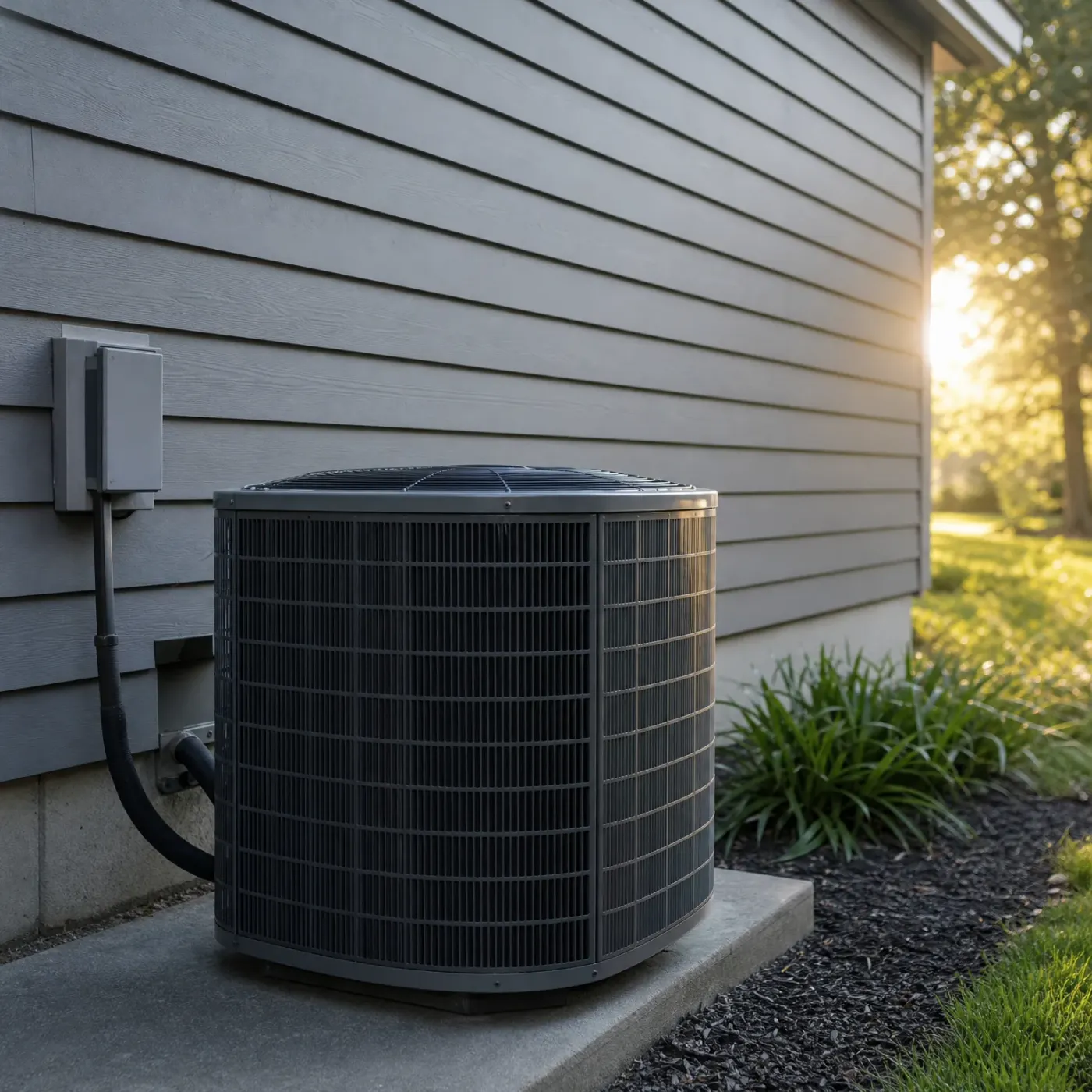
An outdoor air conditioner condenser unit on a concrete pad beside a gray horizontal-lap-sided house, with an electrical disconnect box and refrigerant line on the wall, grass, shrubs and a tree with low sun behind.

A pro who works on heat pumps

Send it today

After this form, you can stop searching for a heat pump pro.

Asking costs nothing, and the choice to hire stays yours.