Tell us about the job
Takes about a minute. No obligation.
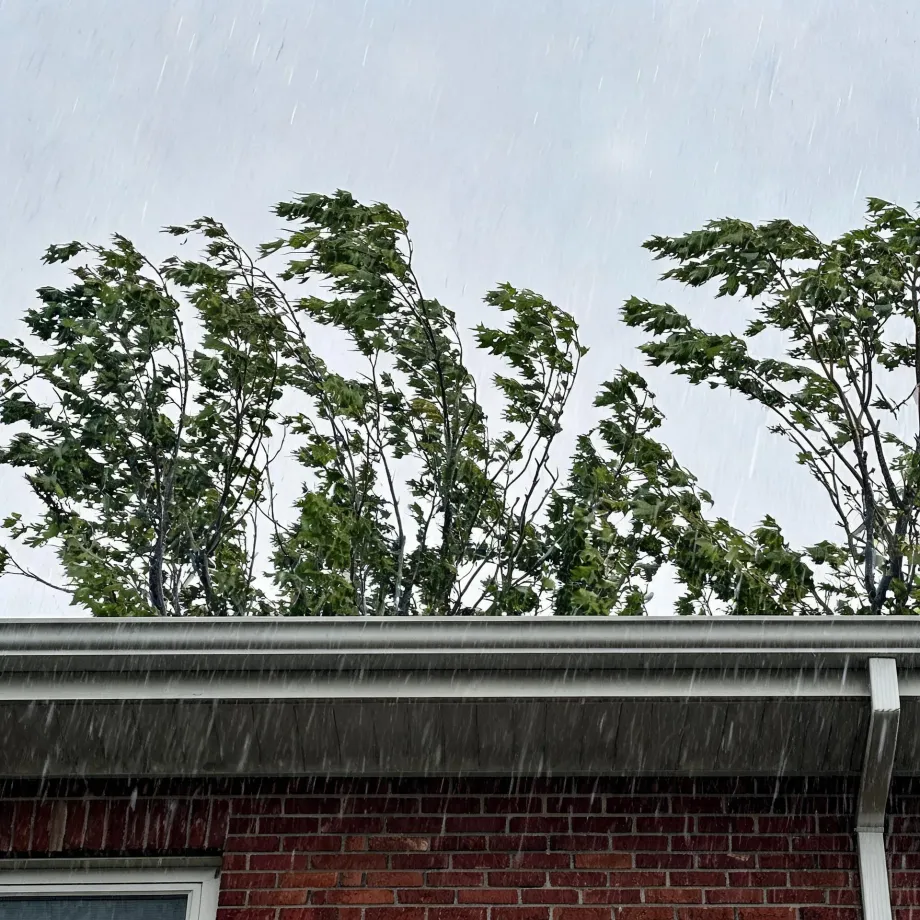
Sizing a heat pump for Butler County starts with what the climate actually demands of the equipment, not what a catalog chart suggests for a square footage. 300 severe weather events were recorded in Butler County, Pennsylvania between 2015 and 2024. At that rate, severe weather is a standing condition here, and a system that fits the math on paper but ignores the load this area places on heating and cooling equipment will be working past its design limits before the first winter is out. A contractor quoting an install in this county has to account for that load when they select equipment and specify the installation, because the margin for error is smaller than it looks.
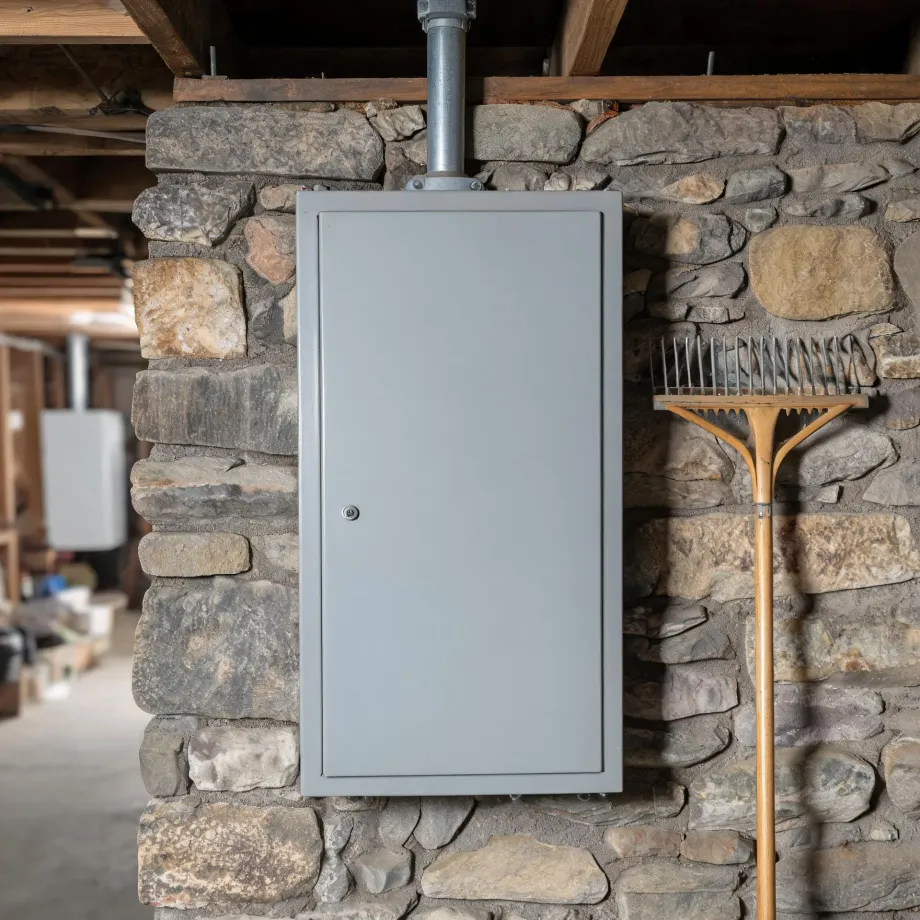
Ductwork sized for older heating systems carries assumptions about static pressure and airflow that a heat pump does not share, and in much of Butler County's housing that ductwork is original. Half the homes in Butler County, Pennsylvania were built in 1980 or earlier (2020-2024 ACS 5-year). A contractor quoting a heat pump installation here opens walls or pulls registers to measure what the existing runs can actually move before any equipment decision is final. What they find determines whether the duct system stays, gets modified, or gets replaced alongside the new unit.
What Gets Installed With a New Heat Pump
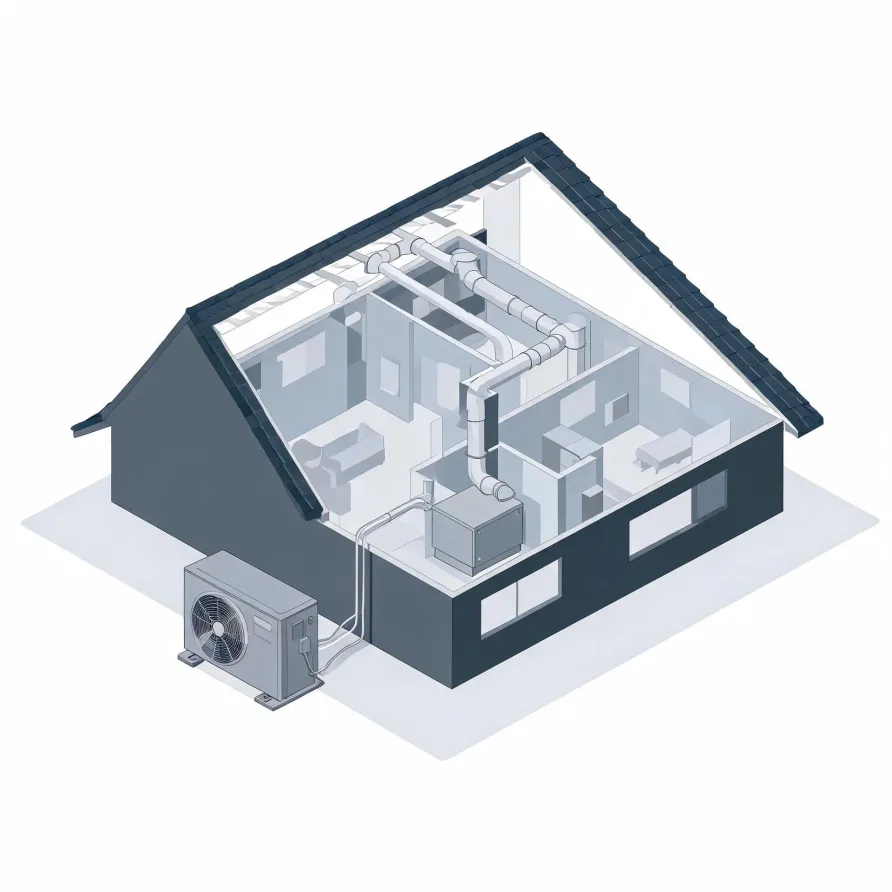
The outdoor unit is the piece a homeowner sees first, mounted on a pad beside the house, and it holds the compressor and the outdoor coil. Inside, the air handler goes in a mechanical room, basement, or closet and pushes conditioned air through the home. Together these two units carry the work of heating and cooling.
A refrigerant line set runs between the outdoor unit and the air handler, connecting the two along an exterior wall and into the building. A thermostat goes on an interior wall where the homeowner controls the system, and an expansion valve sits inside the air handler to regulate refrigerant flow between the coils.
The drawing shows a typical layout, and a licensed contractor determines exactly what applies to this house.
Find a contractor in Butler CountyButler County, by the numbers
300 severe weather events were recorded in Butler County, Pennsylvania between 2015 and 2024.
NOAA National Centers for Environmental Information, Storm Events Database, bulk CSV export, events 2015-01-01 through 2024-12-31.Half the homes in Butler County, Pennsylvania were built in 1980 or earlier (2020-2024 ACS 5-year).
U.S. Census Bureau, 2020-2024 American Community Survey 5-Year EstimatesButler County, Pennsylvania holds 87,382 housing units (2020-2024 ACS 5-year).
U.S. Census Bureau, 2020-2024 American Community Survey 5-Year EstimatesOwners occupy 76.9% of the occupied homes in Butler County, Pennsylvania (2020-2024 ACS 5-year).
U.S. Census Bureau, 2020-2024 American Community Survey 5-Year EstimatesRules and Standards Behind Heat Pump Installation in Butler County, Pennsylvania3 sourced rules and standards
Contractor Rules in Butler County, Pennsylvania
Pennsylvania names the trade in its own definition: installing central heating or air conditioning is a home improvement under the Act, whether or not the equipment is affixed — so an HVAC installation is work the registration requirement reaches.
A Pennsylvania registration displaces the local one: no political subdivision may require a home improvement contractor to register, license or pay a fee on top of it, though building permits and local code enforcement still apply.
Pennsylvania requires home improvement contractor registration rather than a licence: nobody may hold themselves out as a contractor, or perform any home improvement, without first registering with the Bureau of Consumer Protection.
Severe Weather Events in Butler County, Year by Year
Weather shapes how hard heating and cooling equipment has to work, and Butler County's conditions are a real factor in sizing and selecting a heat pump for local homes. What holds up here depends on what the climate here actually does.
300 severe weather events, 2015–2024. Source: NOAA National Centers for Environmental Information, Storm Events Database.