Tell us about the job
Takes about a minute. No obligation.
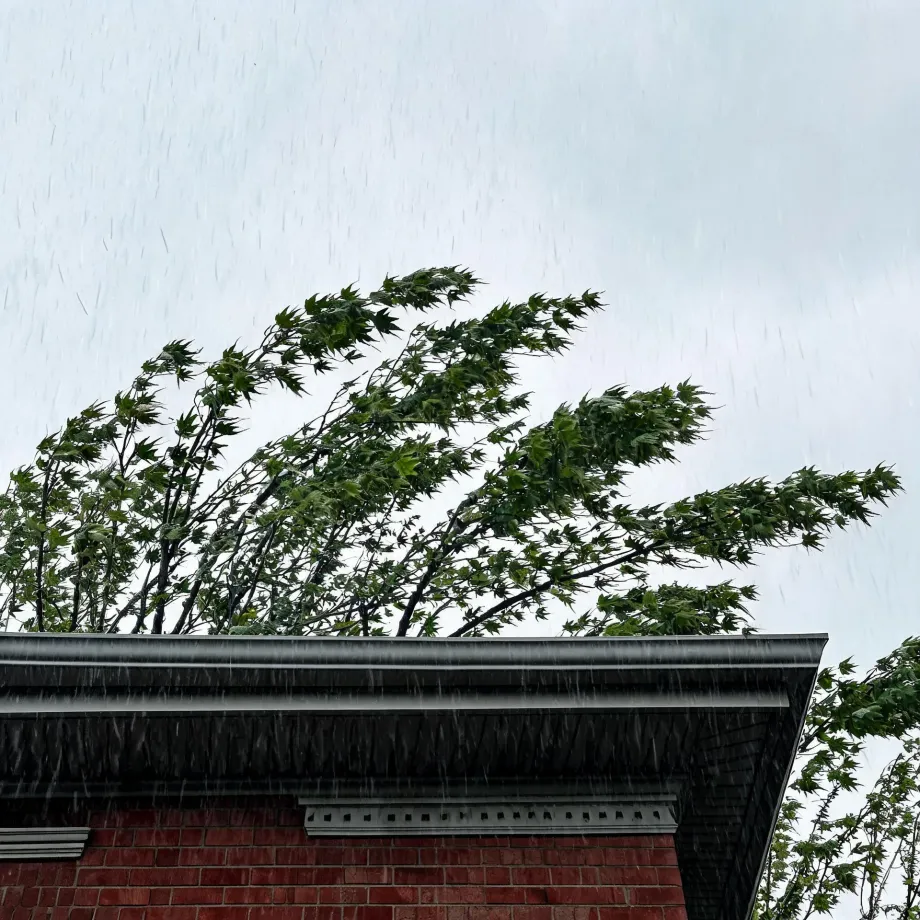
A contractor quoting a heat pump installation in Allegheny County has to treat the local weather as a design input, not a footnote. 690 severe weather events were recorded in Allegheny County, Pennsylvania between 2015 and 2024. At that rate, severe weather is a regular feature of what installed equipment runs against, and the decisions made at installation carry real consequences: the sizing calculation, the refrigerant line routing, the quality of the electrical connections and the tightness of the envelope around the air handler all determine how well the system holds up under repeated stress. A unit correctly sized for this climate performs differently over years than one speced from a generic chart.
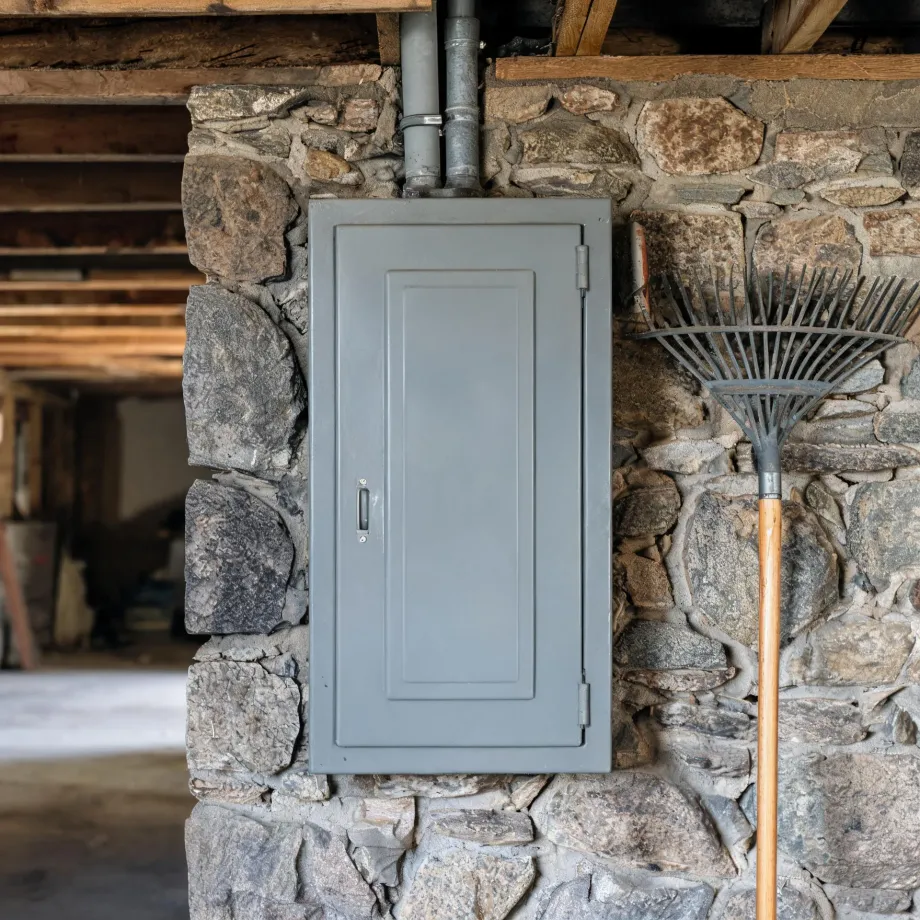
Ductwork laid down for a furnace or a boiler was sized and routed for a different kind of system, and a heat pump has specific airflow requirements that older trunk-and-branch layouts frequently do not meet without modification. Half the homes in Allegheny County, Pennsylvania were built in 1957 or earlier (2020-2024 ACS 5-year). That age puts the condition and configuration of the existing duct runs at the center of what a contractor has to assess before the new equipment can be matched to the house. The electrical service matters too, but it is the ductwork that decides whether the installation proceeds as quoted or opens into a larger conversation about what the house can carry.
What Gets Installed With a New Heat Pump
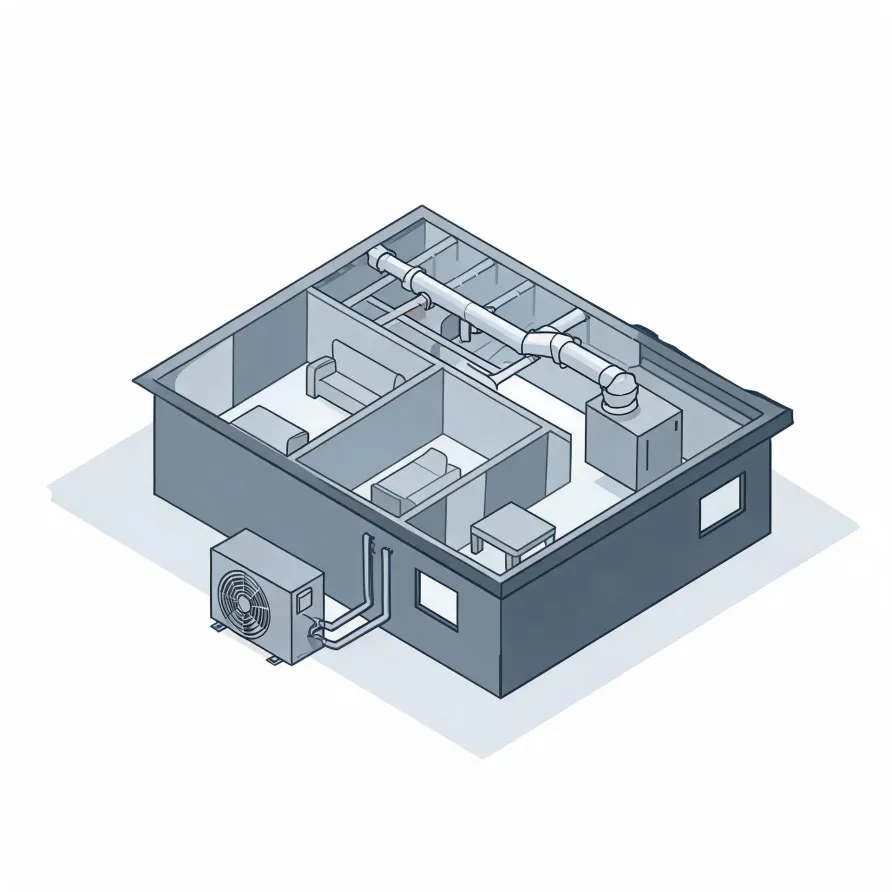
The outdoor unit is the piece a homeowner sees first, a cabinet that sits on a pad beside the house and holds the compressor and the outdoor coil. Inside, the air handler mounts in a utility space, basement, or closet and contains the indoor coil and the blower that moves conditioned air through the home.
A refrigerant line set runs between the two units, connecting the outdoor cabinet to the air handler through a small penetration in the wall. A thermostat goes on an interior wall where it reads the living space and signals the system when to run.
The drawing shows a typical layout, and a licensed contractor determines exactly how each piece fits the conditions of your house.
Find a contractor in Allegheny CountyAllegheny County, by the numbers
690 severe weather events were recorded in Allegheny County, Pennsylvania between 2015 and 2024.
NOAA National Centers for Environmental Information, Storm Events Database, bulk CSV export, events 2015-01-01 through 2024-12-31.Half the homes in Allegheny County, Pennsylvania were built in 1957 or earlier (2020-2024 ACS 5-year).
U.S. Census Bureau, 2020-2024 American Community Survey 5-Year EstimatesAllegheny County, Pennsylvania holds 606,827 housing units (2020-2024 ACS 5-year).
U.S. Census Bureau, 2020-2024 American Community Survey 5-Year EstimatesOwners occupy 65.2% of the occupied homes in Allegheny County, Pennsylvania (2020-2024 ACS 5-year).
U.S. Census Bureau, 2020-2024 American Community Survey 5-Year EstimatesRules and Standards Behind Heat Pump Installation in Allegheny County, Pennsylvania3 sourced rules and standards
Licensing and Legal Requirements in Allegheny County, Pennsylvania
Pennsylvania names the trade in its own definition: installing central heating or air conditioning is a home improvement under the Act, whether or not the equipment is affixed — so an HVAC installation is work the registration requirement reaches.
A Pennsylvania registration displaces the local one: no political subdivision may require a home improvement contractor to register, license or pay a fee on top of it, though building permits and local code enforcement still apply.
Pennsylvania requires home improvement contractor registration rather than a licence: nobody may hold themselves out as a contractor, or perform any home improvement, without first registering with the Bureau of Consumer Protection.
Severe Weather Events in Allegheny County
Heating and cooling equipment in Allegheny County works against whatever the sky delivers, and the local weather record shapes how hard that equipment has to work year after year. Sizing and installing a heat pump here is a decision grounded in this specific climate, not a generic one.
690 severe weather events, 2015–2024. Source: NOAA National Centers for Environmental Information, Storm Events Database.