Tell us about the job
Takes about a minute. No obligation.
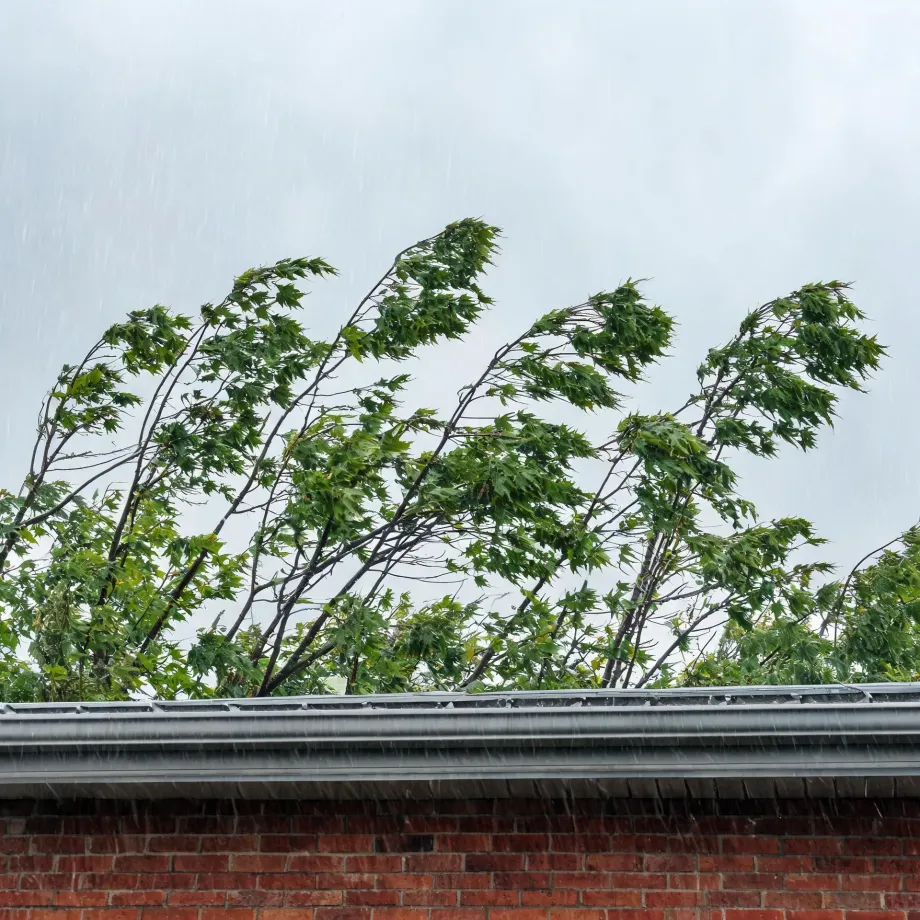
A contractor quoting a heat pump install in Mifflin County has to account for what the climate actually puts on a system year after year. 82 severe weather events were recorded in Mifflin County, Pennsylvania between 2015 and 2024. At that rate, severe weather is a standing condition of operation here, and it bears directly on how a system gets sized and what equipment grade makes sense for the site. A unit specced for a quieter climate will be underpowered before the first heating season is out. The install itself has to be matched to where it is going, not to a catalog average.
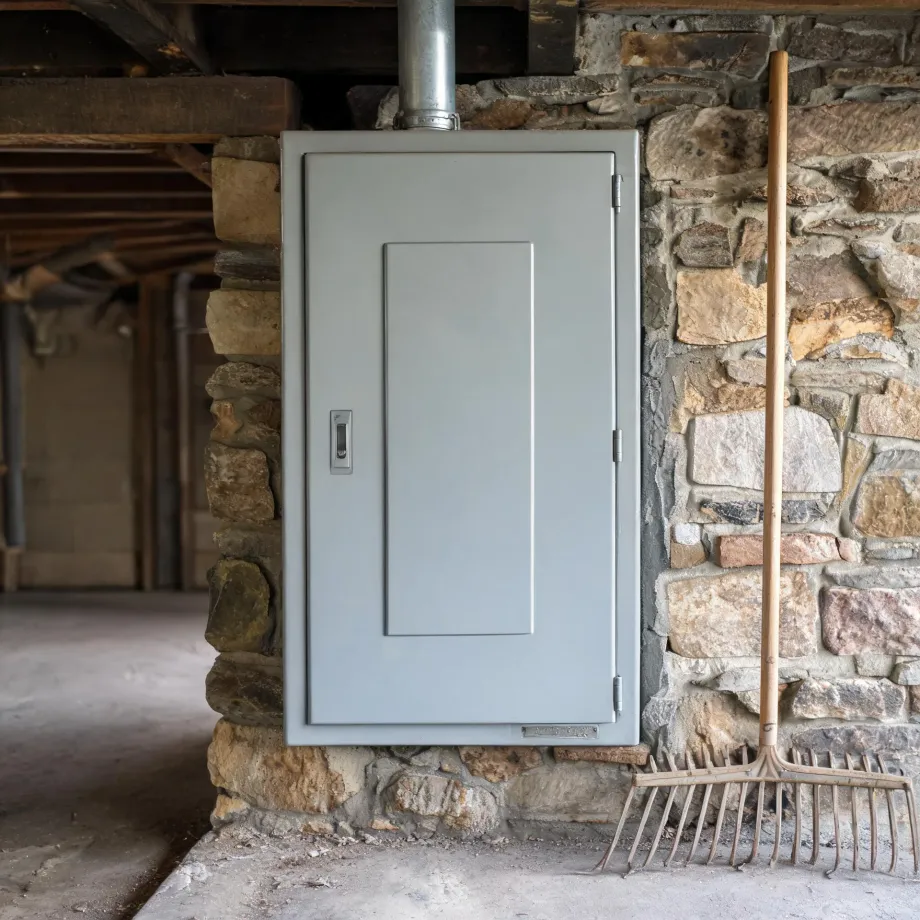
Ductwork laid down for older heating systems was sized and routed for a different kind of equipment. A heat pump moves air on a different pressure profile, and ducts built to the original specifications of that era may restrict airflow enough to undercut efficiency from day one. Half the homes in Mifflin County, Pennsylvania were built in 1960 or earlier (2020-2024 ACS 5-year). A contractor quoting a heat pump installation in this county has to assess whether the existing duct system will carry the new load before the unit itself is selected, because selecting the unit first and discovering the ductwork later produces a second estimate the homeowner did not expect.
What Gets Installed With a New Heat Pump
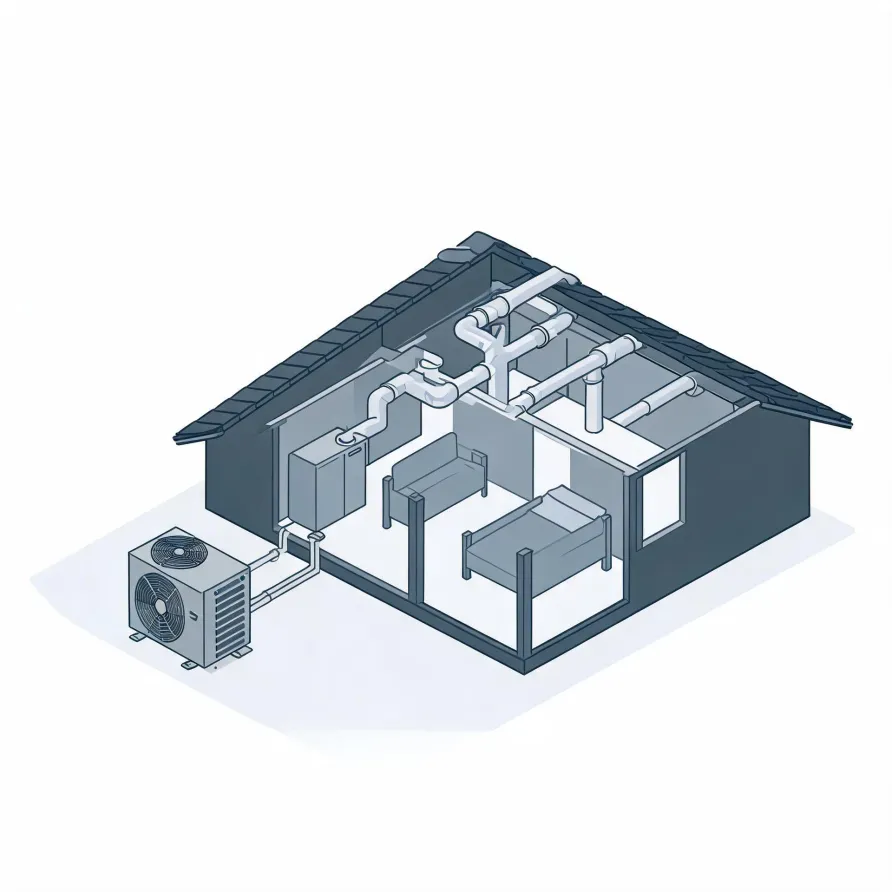
The outdoor unit is the piece most homeowners notice first. It sits on a concrete pad or wall brackets outside the house and holds the compressor and one set of coils. Inside, the air handler mounts in a utility space, closet, or attic and moves conditioned air through the home's supply registers.
A refrigerant line set runs between the two units, carrying refrigerant through insulated copper tubing that passes through a small penetration in the wall. A thermostat goes on an interior wall where it reads the living space and tells the system when to run.
The drawing shows a typical layout, and a licensed contractor determines exactly how each piece is positioned and connected in your home.
Find a contractor in Mifflin CountyMifflin County by the Numbers
82 severe weather events were recorded in Mifflin County, Pennsylvania between 2015 and 2024.
NOAA National Centers for Environmental Information, Storm Events Database, bulk CSV export, events 2015-01-01 through 2024-12-31.Half the homes in Mifflin County, Pennsylvania were built in 1960 or earlier (2020-2024 ACS 5-year).
U.S. Census Bureau, 2020-2024 American Community Survey 5-Year EstimatesMifflin County, Pennsylvania holds 21,468 housing units (2020-2024 ACS 5-year).
U.S. Census Bureau, 2020-2024 American Community Survey 5-Year EstimatesOwners occupy 71.1% of the occupied homes in Mifflin County, Pennsylvania (2020-2024 ACS 5-year).
U.S. Census Bureau, 2020-2024 American Community Survey 5-Year EstimatesCodes & Standards for Heat Pump Installation in Mifflin County, Pennsylvania3 sourced rules and standards
Licensing and Legal Requirements in Mifflin County, Pennsylvania
Pennsylvania names the trade in its own definition: installing central heating or air conditioning is a home improvement under the Act, whether or not the equipment is affixed — so an HVAC installation is work the registration requirement reaches.
A Pennsylvania registration displaces the local one: no political subdivision may require a home improvement contractor to register, license or pay a fee on top of it, though building permits and local code enforcement still apply.
Pennsylvania requires home improvement contractor registration rather than a licence: nobody may hold themselves out as a contractor, or perform any home improvement, without first registering with the Bureau of Consumer Protection.
Severe Weather Events in Mifflin County by Year
Weather in this part of Pennsylvania puts real demands on heating and cooling equipment, and those demands shape what a heat pump here needs to handle across its working life. How often conditions turn severe is a local fact, and it bears directly on installation decisions.
82 severe weather events, 2015–2024. Source: NOAA National Centers for Environmental Information, Storm Events Database.