Tell us about the job
Takes about a minute. No obligation.
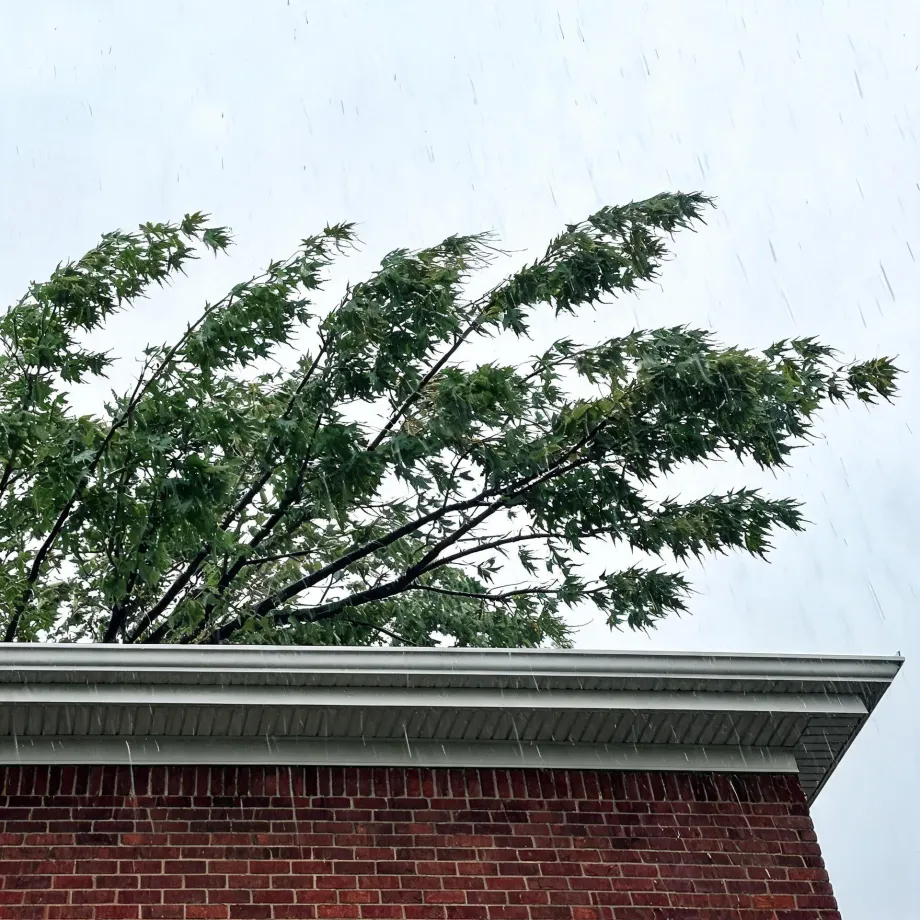
Sizing a heat pump for Washington County starts with what the equipment will run against, not what a product sheet suggests. 344 severe weather events were recorded in Washington County, Pennsylvania between 2015 and 2024. At that rate, severe weather is part of the baseline operating environment, not an occasional variable, and a contractor who ignores it during installation will undersize the system or skip the structural details that let it hold up over years. Refrigerant line routing, mounting, and electrical provisions all change when the climate pushes the equipment this hard this reliably.
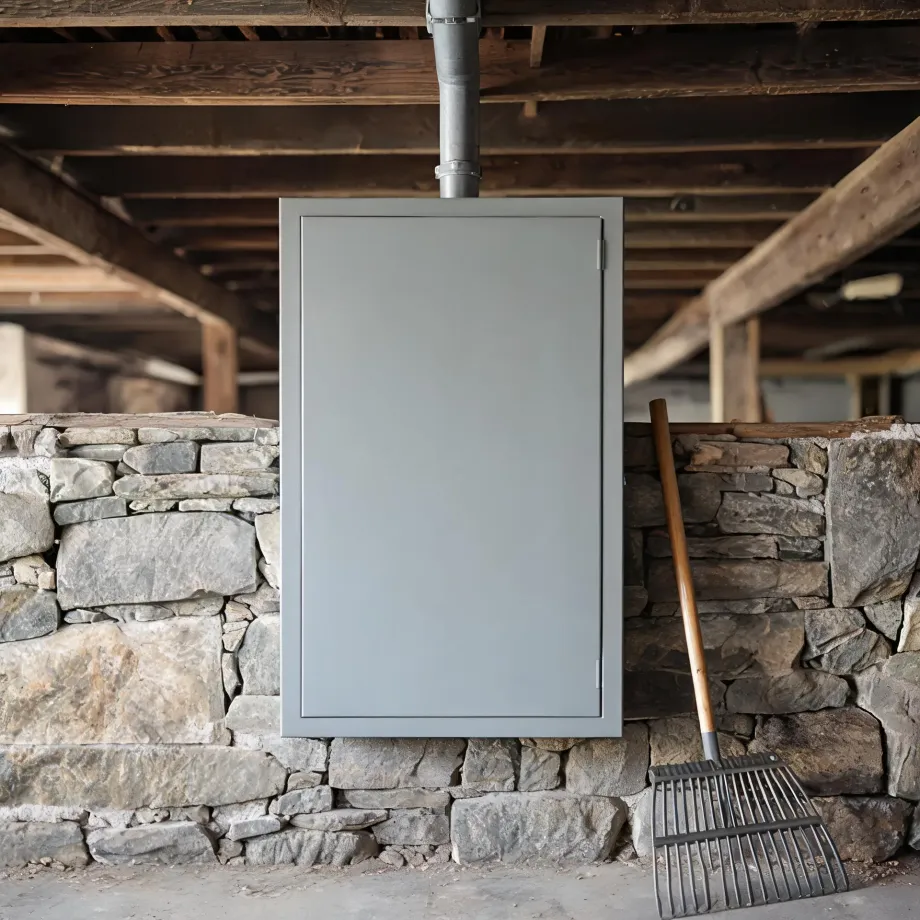
Ductwork laid out for a furnace moves air differently than a heat pump wants to. Whether an existing system in a Washington County house can carry the new load is the first question a contractor has to answer, and the answer is not obvious from a walk-through. Half the homes in Washington County, Pennsylvania were built in 1966 or earlier (2020-2024 ACS 5-year). Houses of that vintage were ducted and wired for whatever was standard at the time, not for the refrigerant-cycle systems going in today. A contractor who finds undersized returns or a panel without the right capacity to spare will be scoping additional work before the equipment question is even settled.
What Gets Installed With a New Heat Pump
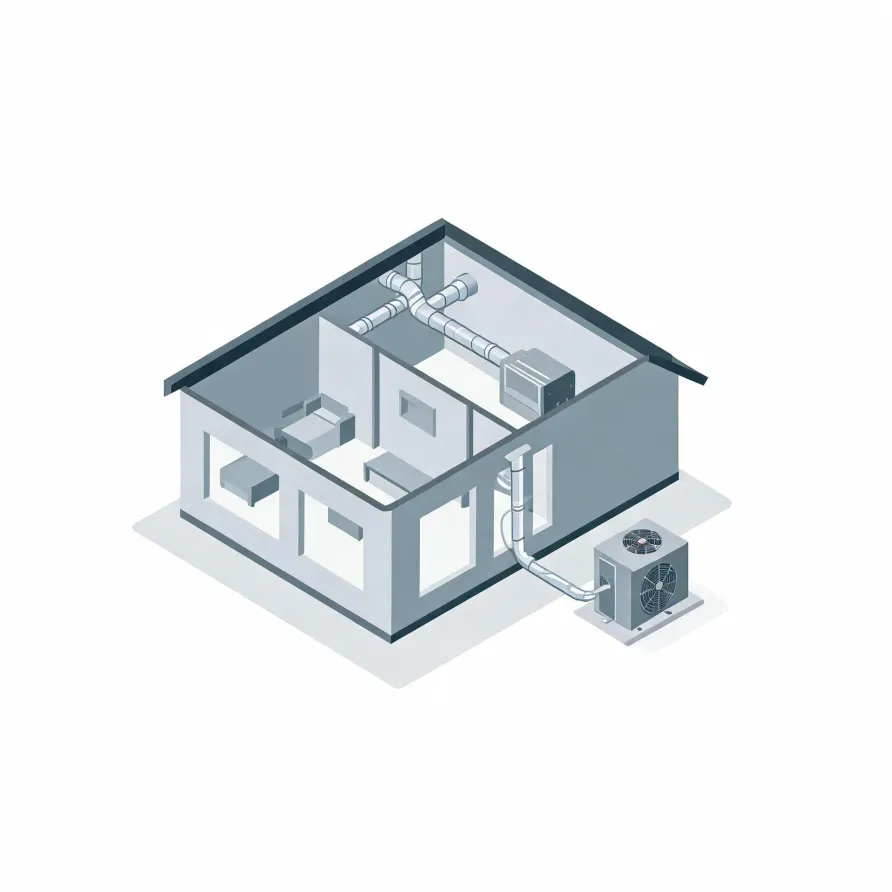
The outdoor unit is the piece most homeowners notice first. It sits on a pad beside the house and holds the compressor and the outdoor coil, which together do the main work of moving heat in or out depending on the season. Inside the house, an air handler is mounted in a utility space, closet, or attic and pushes conditioned air through the home.
A refrigerant line set runs between the two units, carrying the working fluid back and forth through insulated copper tubing. A thermostat goes on an interior wall and gives the homeowner direct control over the system. Some installations also include a condensate drain line running from the air handler to a suitable drain point.
The drawing beside this text shows a typical layout, and a licensed contractor determines exactly what applies to your house and its existing setup.
Find a contractor in Washington CountyWashington County, PA, by the numbers
344 severe weather events were recorded in Washington County, Pennsylvania between 2015 and 2024.
NOAA National Centers for Environmental Information, Storm Events Database, bulk CSV export, events 2015-01-01 through 2024-12-31.Half the homes in Washington County, Pennsylvania were built in 1966 or earlier (2020-2024 ACS 5-year).
U.S. Census Bureau, 2020-2024 American Community Survey 5-Year EstimatesWashington County, Pennsylvania holds 97,923 housing units (2020-2024 ACS 5-year).
U.S. Census Bureau, 2020-2024 American Community Survey 5-Year EstimatesOwners occupy 76.1% of the occupied homes in Washington County, Pennsylvania (2020-2024 ACS 5-year).
U.S. Census Bureau, 2020-2024 American Community Survey 5-Year EstimatesRules and Standards Behind Heat Pump Installation in Washington County, Pennsylvania3 sourced rules and standards
Licensing and Legal Requirements in Washington County, Pennsylvania
Pennsylvania names the trade in its own definition: installing central heating or air conditioning is a home improvement under the Act, whether or not the equipment is affixed — so an HVAC installation is work the registration requirement reaches.
A Pennsylvania registration displaces the local one: no political subdivision may require a home improvement contractor to register, license or pay a fee on top of it, though building permits and local code enforcement still apply.
Pennsylvania requires home improvement contractor registration rather than a licence: nobody may hold themselves out as a contractor, or perform any home improvement, without first registering with the Bureau of Consumer Protection.
Severe Weather Events in Washington County
The weather a heat pump works through shapes how hard it runs and how long its components last. That makes local conditions a real factor in sizing and installing equipment that holds up over time.
344 severe weather events, 2015–2024. Source: NOAA National Centers for Environmental Information, Storm Events Database.